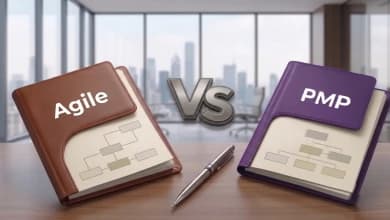
PRINCE2 Foundation vs Practitioner comes down to depth. Foundation teaches you to understand the PRINCE2 method, its principles, practices, and processes, while Practitioner proves you can apply and tailor that method to a real project. Foundation has no prerequisites and suits newcomers; Practitioner is the advanced level for those who will actually run projects. This guide compares the two across exam format, cost, validity, and difficulty, and helps you decide which to take or whether to take both together.
What is PRINCE2 Foundation and Practitioner?
PRINCE2, which stands for PRojects IN Controlled Environments, is a widely recognized project management method offering two certification levels: Foundation and Practitioner. These certifications equip professionals with the skills to manage projects effectively using the PRINCE2 methodology.
PRINCE2 Foundation
PRINCE2 Foundation is the introductory level for those new to project management or the PRINCE2 framework. It provides a basic understanding of the method's principles, terminology, and processes, enabling individuals to work effectively as part of a project management team operating in a PRINCE2 environment. It is ideal for those looking to understand the standard framework and work under the guidance of project managers.
PRINCE2 Practitioner
PRINCE2 Practitioner is the advanced level, tailored for those with some project management experience. It focuses on applying and adapting PRINCE2 to various project circumstances and complexities. It suits individuals managing projects who need to demonstrate they can tailor PRINCE2 to the needs of a specific project scenario.
PRINCE2 Foundation vs Practitioner: Key Differences
The table below compares both levels on the factors that matter most when choosing, using current PRINCE2 7 exam data.
|
Feature |
PRINCE2 Foundation |
PRINCE2 Practitioner |
|
Purpose |
Understand the PRINCE2 method |
Apply and tailor PRINCE2 to real projects |
|
Who it is for |
New or aspiring project managers, team members |
Experienced project managers and project leads |
|
Prerequisites |
None |
Foundation, or an equivalent (PMP, CAPM, IPMA A to D, PMQ/PPQ) |
|
Exam format |
Multiple-choice |
Objective, scenario-based |
|
Number of questions |
60 questions |
70 marks |
|
Exam duration |
60 minutes |
150 minutes |
|
Book |
Closed book |
Open book (official manual only) |
|
Pass mark |
60% (36 of 60) |
60% (42 of 70) |
|
Certification validity |
Does not expire |
3 years (renewal required) |
|
Typical exam cost |
Around £450 to £490 |
Around £500 to £570 |
|
Study time |
About 20 to 30 hours |
About 30 to 40 hours |
|
Typical roles after |
Team member, junior project manager |
Project manager, senior project manager, consultant |
Source: PeopleCert PRINCE2 7 certification details; costs vary by country and provider.
What Do Foundation and Practitioner Actually Cover?
Both draw on the same syllabus: the seven principles, seven practices, and seven processes of PRINCE2 7, plus the People element. The difference is depth. Foundation tests whether you can recognize and recall these elements and define the key terms, which is why the exam is closed book and multiple-choice.
Practitioner tests application and analysis. You are given a project scenario and asked how PRINCE2 would be used within it, which is why the exam is open book and scenario-based. You are rewarded for finding and applying the right guidance under time pressure, not for memorizing the manual. That shift, from knowing the method to using it, is the biggest practical difference and the reason Practitioner carries more weight with employers.
In practice, Foundation gives you the shared vocabulary a project team runs on: what a stage is, what a product description contains, who sits on the project board, and how the processes hand work from one stage to the next. Practitioner then asks you to make judgment calls with that vocabulary, such as how much to scale the processes for a small project, which management products are essential, and how to adapt the practices to a project's risk and complexity. This is why employers treat Foundation as evidence you can join a PRINCE2 project and Practitioner as evidence you can run one.
Do You Need Foundation Before Practitioner?
Yes. You cannot sit the PRINCE2 Practitioner exam without first passing PRINCE2 Foundation or holding a recognized equivalent such as PMP, CAPM, or IPMA Level A to D. Most candidates take Foundation first because it is built to lead directly into the Practitioner syllabus.
Can You Take Foundation and Practitioner Together?
Yes, and many candidates do. Combined courses cover both levels back to back, typically as a five-day classroom program or around 32 hours of self-paced eLearning. You take the two exams separately and must pass Foundation first, but studying them together keeps the method fresh and shortens the overall timeline. Invensis Learning runs both levels in a single PRINCE2 Foundation and Practitioner training track.
How Long Does It Take to Get Certified?
Timelines depend on the route and your background. Foundation typically needs about 20 to 30 hours of study, which most people cover in two to three days of PRINCE2 Foundation training plus some self-study before the exam. Practitioner adds roughly 30 to 40 hours because the scenario practice takes longer to master, usually spread over about a week. A combined course compresses both into a single five-day classroom program or around 32 hours of guided eLearning, followed by the two exams.
If you already hold Foundation from a previous year, you do not repeat it: you go straight to PRINCE2 Practitioner training, which is the faster and cheaper route. If you are starting from zero and want the full credential quickly, the combined path is the most efficient because it removes the gap between the two exams where knowledge fades.
Is PRINCE2 Practitioner Harder Than Foundation?
Practitioner is the harder exam. According to UK PRINCE2 exam pass rates, Foundation sits at about 97% while Practitioner is around 73%, so most candidates clear Foundation comfortably while a meaningful share need a second attempt at Practitioner. The reason is the format: Foundation rewards recall, whereas Practitioner presents a project scenario and expects you to locate and apply the right guidance from the open-book manual under time pressure.
The practical takeaway is that Practitioner preparation should be scenario-led. Reading the manual cover to cover is not enough; you need timed practice with sample scenario questions so you can navigate the manual quickly and reason from it rather than recall it. For a full study approach, see these PRINCE2 exam preparation tips.
Foundation or Practitioner: Which Should You Choose?
-
Choose Foundation if you are new to project management, work within a PRINCE2 team, or need to show you understand the method for a support or coordination role.
-
Choose Practitioner if you already manage projects or will soon, and you need to prove you can apply and tailor PRINCE2 to real delivery, which most project manager postings expect.
-
Choose both together if you are aiming for a project management role and want the full credential in one go, since Practitioner without Foundation is not possible anyway.
For most people building a project management career, both together is the pragmatic answer. Foundation alone makes sense when your role is genuinely support or team-based, or when you want to test your interest before committing to the full pathway.
Does PRINCE2 Certification Expire?
The two levels differ, and the live page currently contradicts itself, so this is the corrected position. The PRINCE2 Foundation certificate does not expire, so once you pass it you hold it indefinitely. The PRINCE2 Practitioner certificate is valid for three years from the award date, after which you keep it current through PeopleCert's renewal route rather than resitting the full exam.
Career and Salary Impact
Foundation typically supports team and junior project roles, while Practitioner is the level employers look for in project manager, senior project manager, and consultant postings. Certified professionals also tend to earn more than non-certified peers, and the uplift grows at Practitioner level. For pay by role, country, and experience, see this PRINCE2 salary guide.
The two levels open different doors: Foundation gets you into coordination and support positions, while Practitioner unlocks accountable delivery roles. For the specific job titles each level leads to, these PRINCE2 career opportunities map the progression.
Conclusion
PRINCE2 Foundation and Practitioner are two stages of the same method rather than competing choices: Foundation proves you understand PRINCE2, and Practitioner proves you can run projects with it. Beginners and team members are well served by Foundation, while anyone heading into a project management role should aim for Practitioner, usually by taking both together. Whichever route fits, structured preparation with a provider such as Invensis Learning helps you pass first time and put the credential to work.
FAQs on PRINCE2 Foundation vs Practitioner
What is the difference between PRINCE2 Foundation and Practitioner?
PRINCE2 Foundation introduces the basic principles and terminology of the methodology, ideal for beginners. The Practitioner level focuses on applying and adapting the PRINCE2 framework in real-world projects, which suits those managing projects.
How much do PRINCE2 Foundation and Practitioner cost?
Exam fees vary by country and provider, but Foundation typically runs around £450 to £490 and Practitioner around £500 to £570. Combined training-plus-exam packages bundle both levels and cost more.
Is PRINCE2 Foundation enough on its own?
PRINCE2 Foundation is sufficient if your goal is to gain a basic understanding of the methodology and work within project teams. For managing projects and advancing, Practitioner is recommended.
Do employers prefer PRINCE2 Foundation or Practitioner?
For project management roles, employers generally look for Practitioner because it proves you can apply the method, not just recall it. Foundation is valued for team, coordination, and support roles, and as evidence you are progressing toward Practitioner.
What comes after PRINCE2 Practitioner?
After Practitioner, professionals often add PRINCE2 Agile for hybrid delivery, or move toward program and portfolio credentials as they take on larger, multi-project responsibilities.
Is PRINCE2 7 different from the older 6th edition exams?
Yes. PRINCE2 7 uses practices in place of themes, adds a People element, and updated the exams. Both Foundation and Practitioner now use a 60% pass mark, so older references to a 55% pass mark reflect the retired 6th edition.