Lean Six Sigma Green Belt salary in the United States averages $119,800 per year as of 2026, according to Salary.com. This certification validates expertise in the DMAIC (Define, Measure, Analyze, Improve, Control) framework and Lean waste-reduction principles. Employers across manufacturing, healthcare, finance, and technology pay a premium for professionals who can lead improvement projects and deliver measurable cost savings.
This guide covers current Green Belt compensation by job role, industry, country, and experience level so you can benchmark your earning potential in 2026.
What Does a Lean Six Sigma Green Belt Earn in 2026?
A certified Six Sigma Green Belt in the United States earns between $110,300 and $129,700 per year at the 25th to 75th percentile, with top earners reaching $138,713 at the 90th percentile (Salary.com, 2026). The median sits at $119,800, placing it among the stronger salary premiums for mid-level professional certifications.
The IASSC Green Belt exam consists of 100 questions in 3 hours with a minimum 70% passing score, and no formal prerequisites are required. This accessible entry point combined with strong earning potential makes the Green Belt a popular quality management credential. For a full overview of career advantages beyond salary, see the Green Belt benefits guide.
Green Belt Salary by Job Role in the United States
Compensation varies depending on the specific position a Green Belt professional holds. The table below shows average annual pay for common roles that require or value this certification in the United States.
|
Job Role |
Average Annual Salary (USD) |
|
Six Sigma Green Belt |
$119,800 |
|
Operations Manager |
$121,200 |
|
Quality Assurance Manager |
$126,600 |
|
Process Improvement Manager |
$135,000 |
|
Project Manager |
$143,000 |
Source: Salary.com (2026). Figures reflect median base pay for professionals with Six Sigma certification.
Project Managers and Process Improvement Managers command the highest salaries because they carry direct accountability for operational outcomes and cost reduction targets. If you are targeting these roles, practicing with common Green Belt interviews can sharpen your preparation.
How Does Industry Affect Green Belt Pay?
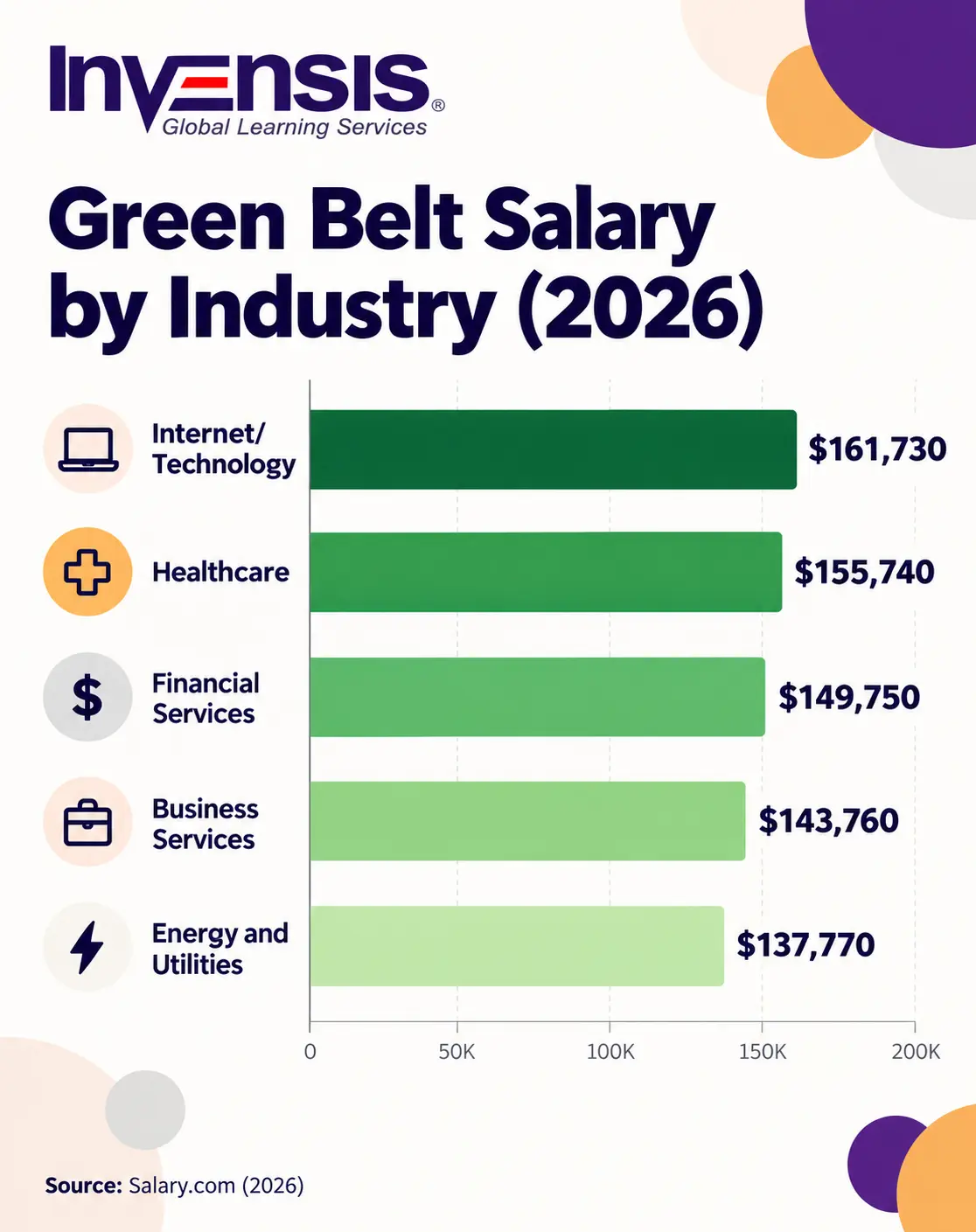
Industry is one of the largest salary drivers for Green Belt professionals. High-revenue sectors that depend on process efficiency and regulatory compliance tend to offer the highest compensation. The table below shows average annual salaries by industry for Six Sigma Green Belt certified professionals.
|
Industry |
Average Annual Salary (USD) |
|
Internet/Technology |
$161,730 |
|
Healthcare |
$155,740 |
|
Financial Services |
$149,750 |
|
Business Services |
$143,760 |
|
Energy and Utilities |
$137,770 |
Source: Salary.com (2026)
The gap between the highest and lowest paying industries exceeds $23,000, highlighting the importance of sector choice when planning your career. Technology and healthcare organizations rely heavily on data-driven process optimization, which directly aligns with the DMAIC skills Green Belt holders bring.
Green Belt Salary by Country
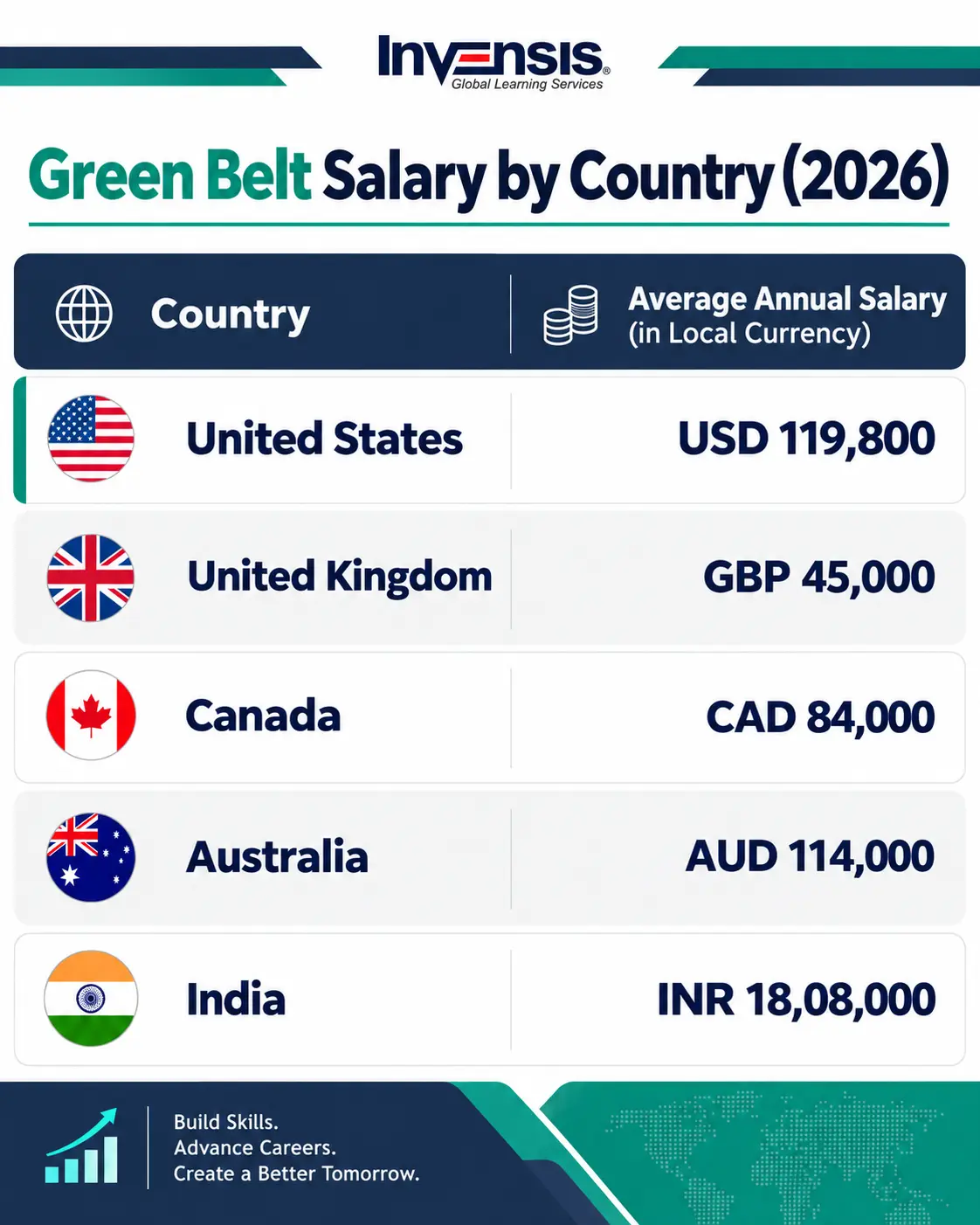
Lean Six Sigma Green Belt salaries differ across global markets based on local demand, cost of living, and the maturity of process improvement practices in each region. The table below shows average annual salaries in five major markets.
|
Country |
Average Annual Salary |
|
United States |
USD 119,800 |
|
United Kingdom |
GBP 45,000 |
|
Canada |
CAD 84,000 |
|
Australia |
AUD 114,000 |
|
India |
INR 18,08,000 |
Sources: Salary.com (US, 2026); Glassdoor, PayScale, and regional salary surveys (international, 2025 to 2026)
The United States offers the highest absolute salaries, though Australia and Canada also provide strong compensation relative to cost of living. India's Green Belt demand is growing rapidly, driven by government-backed manufacturing initiatives and the expansion of operational excellence programs across major organizations.
How Experience Level Impacts Green Belt Earnings
Experience plays a role in Green Belt compensation, though the certification itself provides a significant baseline salary premium. The table below shows average annual salaries by experience level for Green Belt professionals in the United States.
|
Experience Level |
Average Annual Salary (USD) |
|
Entry Level (less than 1 year) |
$116,200 |
|
Early to Mid Career (1 to 5 years) |
$119,800 |
|
Senior/Expert (8+ years) |
$120,600 |
Source: Salary.com (2026)
The relatively narrow range between entry-level and senior salaries ($116,200 to $120,600) suggests that the Green Belt certification itself drives the majority of the salary premium rather than tenure alone. Professionals seeking a larger pay jump often pursue a Black Belt, which commands a median salary of $132,800 or higher. The full Black Belt comparison covers the differences in scope, requirements, and earning potential.
How to Increase Your Green Belt Salary
Several strategies can help Green Belt professionals maximize their earning potential:
-
Target high-paying industries. Technology, healthcare, and financial services consistently offer the highest Green Belt salaries. Transitioning to these sectors can yield significant pay increases.
-
Build complementary skills. Adding project management, data analytics, or change management expertise alongside your core Six Sigma skills makes you a more versatile candidate.
-
Advance to Black Belt. The salary jump from Green Belt to Black Belt averages $13,000 to $17,000 per year. Mapping out your Six Sigma careers path helps you plan this progression strategically.
-
Negotiate with data. Use the salary benchmarks in this guide to support your compensation discussions with specific figures tied to your role, industry, and location.
Conclusion
Lean Six Sigma Green Belt salary data for 2026 confirms that certified professionals earn a strong premium, with the US average at $119,800 per year. Industry choice, geographic location, and career progression all influence where you fall within the salary range. The certification delivers immediate value at the entry level and opens a clear pathway to higher earnings through advanced certifications and leadership roles.
Invensis Learning offers Green Belt training to help you earn this credential and start capturing these salary benchmarks. Enroll to build the DMAIC and Lean skills employers are paying for.
Frequently Asked Questions
Does Six Sigma Green Belt certification increase salary?
Yes. Green Belt certified professionals in the United States earn an average of $119,800 per year, which is significantly above the national average for non-certified quality and operations professionals. Many professionals report a salary increase within 6 to 12 months of earning the certification.
What is the entry-level salary for a Green Belt professional?
Entry-level Green Belt professionals with less than one year of experience earn approximately $116,200 per year in the United States. The certification provides a strong starting salary because employers value the standardized DMAIC skills it represents.
Is Lean Six Sigma Green Belt certification worth the investment?
For most professionals, yes. The IASSC Green Belt exam costs $350, and structured training programs are available at various price points. Given the average certified salary of $119,800, the return on investment is typically realized within months of obtaining the certification.
How long does it take to see a salary increase after certification?
Most professionals see a salary increase within 6 to 12 months of earning their Green Belt. The timeline depends on whether you negotiate a raise in your current role, move to a new position, or take on additional process improvement responsibilities that justify higher compensation.
What skills help Green Belt professionals earn higher salaries?
Statistical analysis, project management, data visualization, and change management are the top complementary skills that boost Green Belt salaries. Professionals who combine DMAIC expertise with business acumen and leadership capabilities command the highest compensation packages.