The Lean Six Sigma Yellow Belt salary in the United States averages $82,000 per year, according to PayScale (2026). Certified professionals earn more than non-certified peers across manufacturing, healthcare, finance, and IT. Salary varies by country, experience level, job role, and industry, with senior professionals earning over $100,000 annually.
A Lean Six Sigma Yellow Belt certification, governed by the International Association for Six Sigma Certification (IASSC), validates your foundational knowledge of the Define, Measure, and Control (DMC) framework. Candidates who pass the Yellow Belt exam demonstrate their ability to support project teams and drive quality outcomes. As organizations prioritize operational efficiency, demand for certified professionals continues to grow. Below is a detailed breakdown of what you can expect to earn with this credential in 2026.
How Much Do Yellow Belt Certified Professionals Earn?
According to PayScale (updated July 2026), the median base salary for a Certified Six Sigma Yellow Belt in the United States is $82,000 per year, based on 1,828 survey respondents. The full range spans from $59,638 at the 10th percentile to $120,864 at the 90th percentile.
This positions Yellow Belt holders well above the national median income and creates a strong foundation for advancement. Professionals who move into project leadership or management roles see the steepest salary gains over time.
Lean Six Sigma Yellow Belt Salary by Country
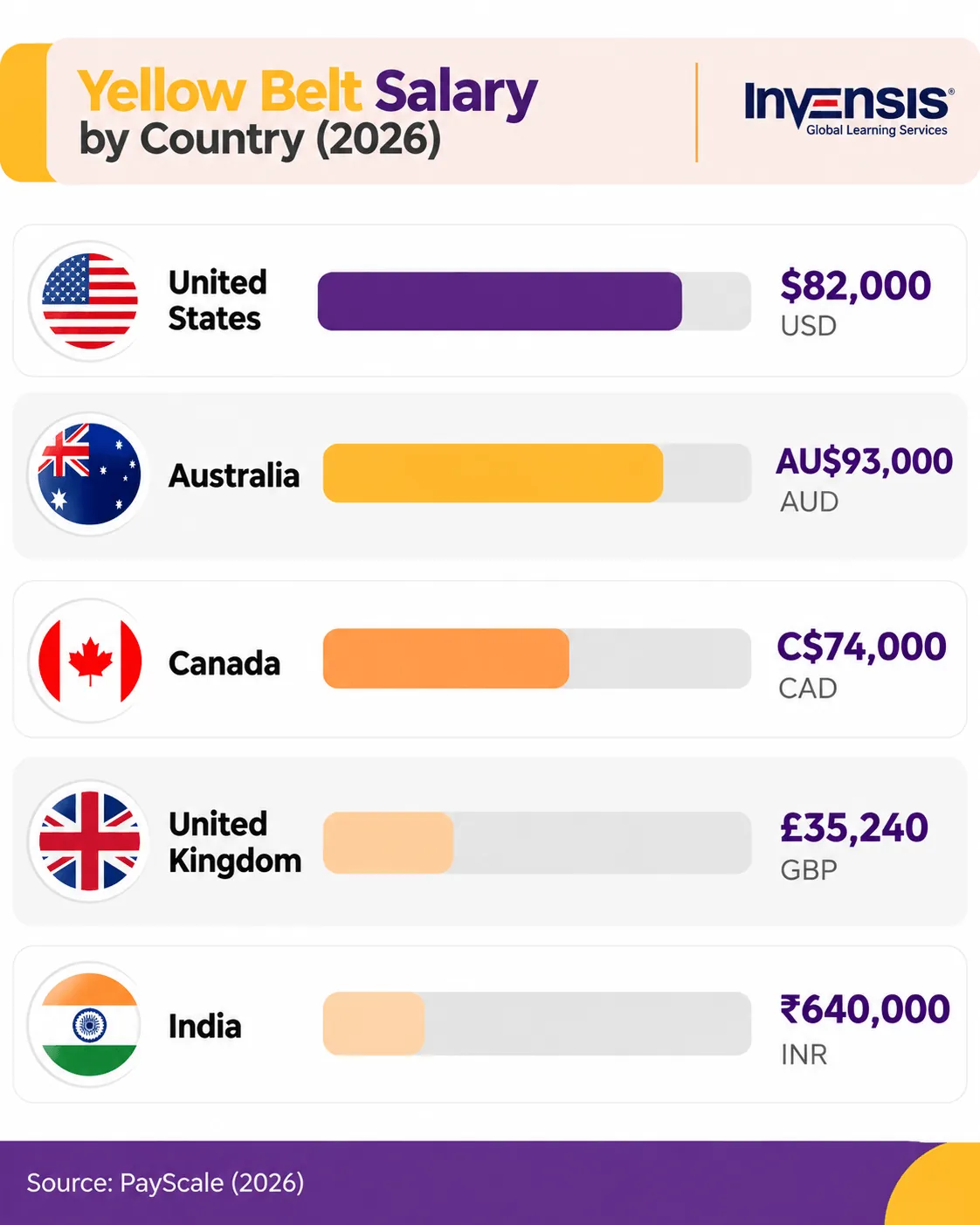
Yellow Belt compensation varies widely across global markets due to regional economic conditions, industry presence, and cost of living. The table below shows the average annual salary for Certified Six Sigma Yellow Belt professionals in five major markets.
|
Country |
Average Annual Salary |
Data Updated |
|
United States |
$82,000 (USD) |
July 2026 |
|
Australia |
AU$93,000 (AUD) |
December 2025 |
|
Canada |
C$74,000 (CAD) |
March 2025 |
|
United Kingdom |
£35,240 (GBP) |
February 2025 |
|
India |
₹640,000 (INR) |
February 2026 |
Source: PayScale (country-specific certification salary pages)
Australia and the United States offer the highest compensation in absolute terms, driven by demand in manufacturing, mining, and healthcare. For a comparison of how all Lean Six Sigma belt levels compare across regions, see the full certification salaries overview.
What Is the Yellow Belt Salary Based on Experience?
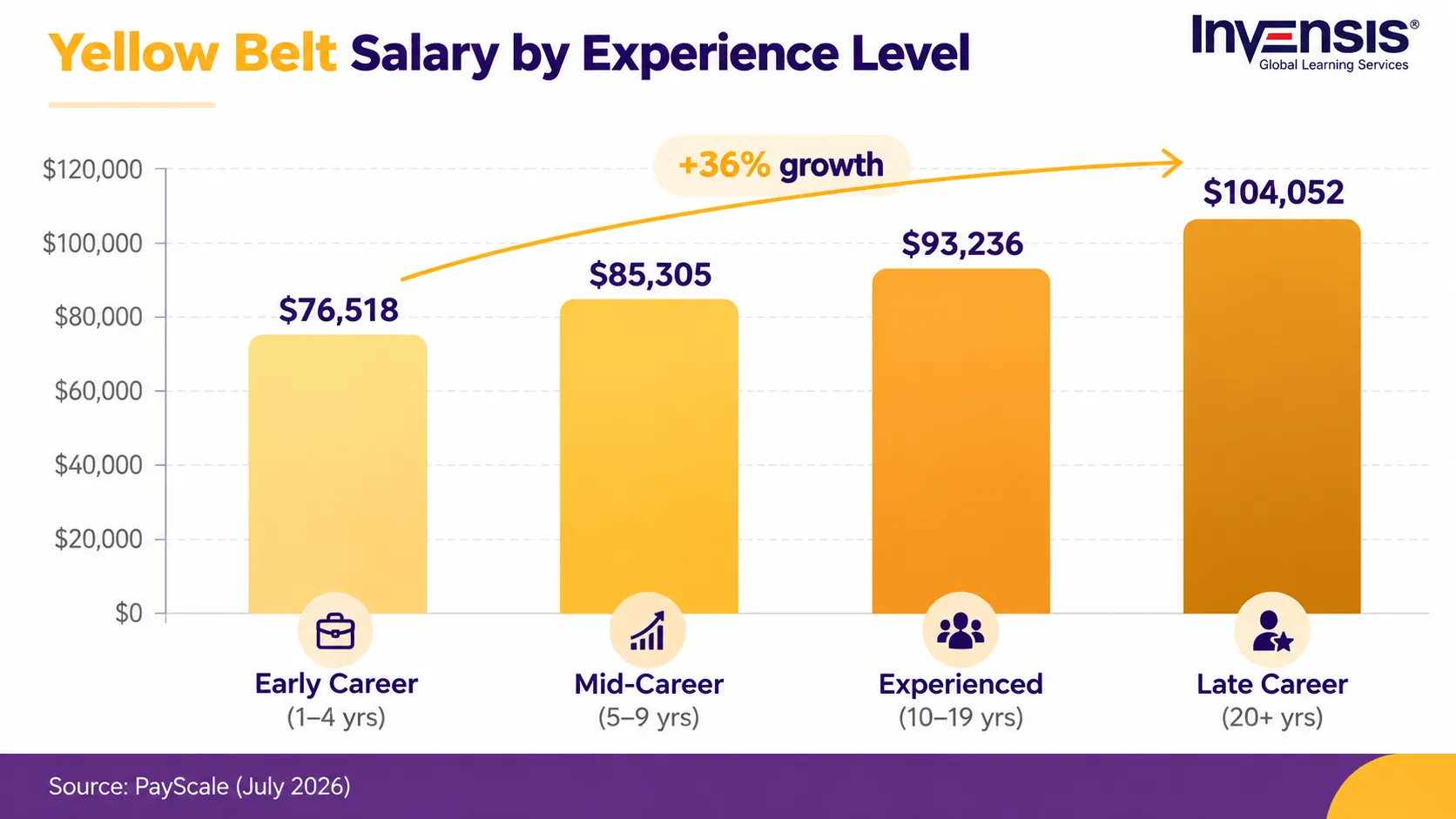
Experience is one of the strongest predictors of Yellow Belt salary. Early-career professionals earn a median of $76,518, while those with 20 or more years of experience earn $104,052, representing a 36% increase over the course of a career.
|
Experience Level |
Median Annual Salary (USD) |
|
Early Career (1-4 years) |
$76,518 |
|
Mid-Career (5-9 years) |
$85,305 |
|
Experienced (10-19 years) |
$93,236 |
|
Late Career (20+ years) |
$104,052 |
Source: PayScale (July 2026, 1,828 respondents)
The steady salary progression confirms that the certification delivers long-term financial returns. Professionals who earn their credential early benefit from compounding salary gains throughout their career.
Yellow Belt Salary Based on Job Role
Lean Six Sigma Yellow Belt holders work across a variety of functions, from engineering to business analysis. The table below shows median salaries for common roles held by certified professionals in the United States, based on PayScale data (July 2026).
|
Job Title |
Median Salary (USD) |
|
Data Analyst |
$80,244 |
|
Mechanical Engineer |
$79,987 |
|
Supply Chain Analyst |
$76,847 |
|
Business Analyst |
$68,868 |
Source: PayScale (July 2026)
Data analysts and mechanical engineers command the highest median pay among Yellow Belt holders. For a broader look at process improvement roles and progression opportunities, explore the Lean Six Sigma careers guide.
Key Factors That Affect Yellow Belt Salary
Several variables determine how much a Yellow Belt certified professional earns. Understanding these factors helps you maximize your earning potential.
-
Industry: Manufacturing, healthcare, financial services, and IT pay the highest salaries for process improvement and quality management roles.
-
Location: Metropolitan areas and countries with higher costs of living (the US, Australia) offer larger compensation packages.
-
Experience: Each additional year adds measurable value, with late-career professionals earning 36% more than early-career peers.
-
Additional Certifications: Pairing a Yellow Belt with PMP, ITIL, or advancing to Green Belt or Black Belt significantly boosts pay.
-
Company Size: Large employers such as Boeing ($89,617), Caterpillar ($94,405), and NextEra Energy ($93,000) pay above-average salaries for certified staff, according to PayScale (2026).
Beyond salary, the certification delivers broader career advantages. Learn more about the full range of Yellow Belt benefits that strengthen your professional profile.
How to Increase Your Yellow Belt Earning Potential
If you hold a Yellow Belt and want to earn more, consider these steps:
-
Advance to Green Belt: Green Belt certification opens access to project leadership roles with higher compensation. Review the Green vs Yellow comparison to plan your next move.
-
Target High-Paying Industries: Transition into manufacturing, healthcare, or financial services where Six Sigma skills carry a premium.
-
Gain Project Experience: Apply your DMC framework knowledge on real projects. Documented results strengthen your case for raises and promotions.
-
Relocate Strategically: Positions in the US or Australia typically offer the highest base compensation for Yellow Belt professionals.
Conclusion
The Lean Six Sigma Yellow Belt salary reflects strong market demand for professionals with process improvement expertise. With a US median of $82,000 and earnings exceeding $100,000 for experienced professionals, the certification delivers clear financial returns. Your earning potential grows with experience, industry choice, and additional credentials.
Ready to start your Lean Six Sigma journey? Explore the Yellow Belt training program from Invensis Learning to build the skills employers value and position yourself for salary growth in 2026 and beyond.
Frequently Asked Questions
What is the average Lean Six Sigma Yellow Belt salary in the United States?
According to PayScale (July 2026), the average base salary for a Certified Six Sigma Yellow Belt in the US is $82,000 per year. Salaries range from about $59,600 at the 10th percentile to over $120,800 at the 90th percentile, depending on experience, industry, and location.
Does a Yellow Belt certification lead to higher pay?
Yes. Certified Yellow Belt professionals typically earn more than non-certified peers in comparable roles. PayScale data shows median salaries growing from $76,518 at the early-career level to $104,052 for late-career professionals, indicating strong salary progression tied to the credential.
Which industries offer the highest salaries for Yellow Belt holders?
Manufacturing, healthcare, financial services, and IT consistently pay the most for Yellow Belt certified professionals. Large employers in aerospace and defense, such as Boeing and Northrop Grumman, also offer above-average compensation for staff with Lean Six Sigma credentials.
How does Yellow Belt salary compare to Green Belt and Black Belt?
Yellow Belt is the entry-level Lean Six Sigma certification and carries a lower salary ceiling than Green Belt or Black Belt. Green Belt professionals typically earn $90,000 to $110,000 annually, while Black Belt holders can exceed $120,000. Yellow Belt is the fastest to earn and serves as a stepping stone to higher belt levels.
What is the Six Sigma Yellow Belt salary in India?
According to PayScale (February 2026), the average salary for a Certified Six Sigma Yellow Belt in India is approximately ₹640,000 per year. With 10 to 19 years of experience, the median rises to about ₹997,000 annually.
Is the Yellow Belt certification worth the investment?
For most professionals, yes. The IASSC Yellow Belt exam costs $250, and training programs typically range from $500 to $1,200. With an average US salary of $82,000, the certification investment is typically recouped within the first year. The credential also serves as a foundation for advancing to higher-paying Green Belt and Black Belt roles.