Effective communication is the backbone of successful project management. It bridges the gap between team members, stakeholders, and clients, ensuring everyone understands the project's goals, tasks, and progress. Miscommunication can lead to delays, errors, or even project failure, making it essential to share information clearly and consistently. Whether it's holding team meetings, sharing updates, or addressing concerns, effective communication helps keep the project on track and ensures all parties are aligned.
Good communication also fosters collaboration and trust within the team. It creates an environment where ideas can be freely exchanged, issues can be resolved promptly, and feedback is valued. This not only boosts team morale but also enhances overall productivity.
In this blog, we'll explore how communication impacts project success and provide actionable tips to help you strengthen communication within your projects.
Why Effective Communication Matters in Project Management?
Effective communication is key to ensuring projects run smoothly and meet their objectives. It helps align teams, clarify expectations, and resolve challenges effectively.
Why Communication is Important in Project Management?
- Clarifies Goals and Expectations: Ensures that everyone understands the project objectives, tasks, and timelines
- Improves Team Collaboration: Encourages open discussions, idea sharing, and cooperative problem-solving
- Minimizes Misunderstandings: Reduces the chances of errors and miscommunication that can delay progress
- Builds Trust and Transparency: Keeps all stakeholders informed, fostering trust and accountability
- Enhances Decision-Making: Provides the necessary information for making informed and timely decisions
- Promotes Conflict Resolution: Helps address concerns quickly and maintain harmony within the team
- Boosts Overall Productivity: Creates a smooth workflow, ensuring projects are completed on time and within budget.
How Communication Impacts Project Success?
Communication plays a critical role in project management, as it serves as the foundation for ensuring that all stakeholders are aligned and informed throughout the project's lifecycle. Here are the key aspects of communication in project management:
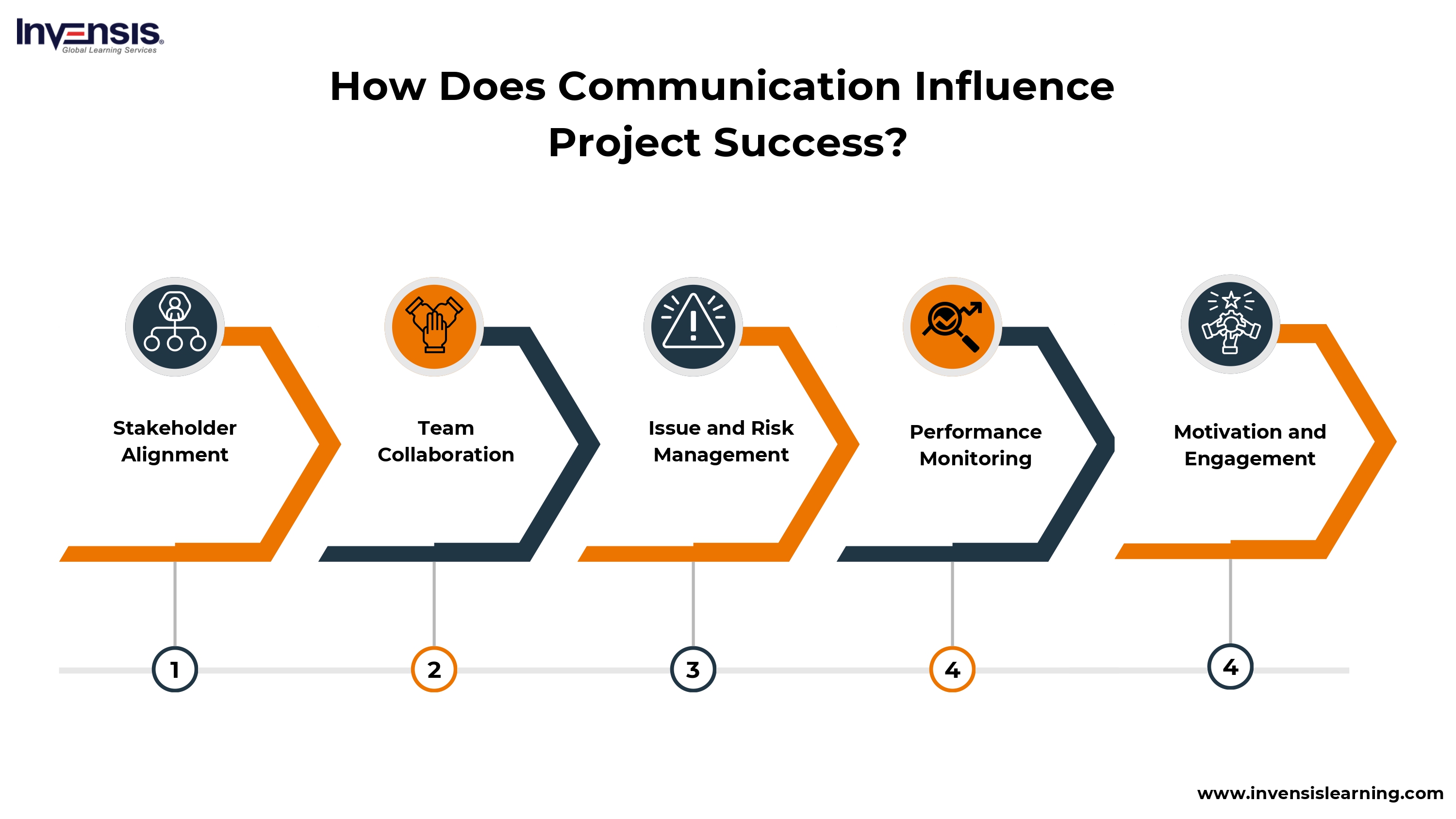
- Stakeholder Alignment: Clear communication ensures that project stakeholders, including the team, clients, and sponsors, have a shared understanding of project goals, timelines, and expectations. Regular updates and discussions help manage expectations and avoid misunderstandings.
- Team Collaboration: Effective communication fosters collaboration within the project team. By keeping team members informed of progress, challenges, and changes, communication helps in problem-solving and decision-making, ensuring that everyone is working towards the same objectives.
- Issue and Risk Management: Open communication channels enable early identification of potential risks and issues. By discussing challenges promptly, the team can develop solutions and mitigate risks before they escalate, minimizing disruptions to the project.
- Performance Monitoring: Communication is essential for tracking project progress and performance. Regular status meetings, reports, and feedback loops allow project managers to assess whether the project is on track and make necessary adjustments.
- Motivation and Engagement: Positive and transparent communication contributes to a motivating environment. When team members feel informed and valued through effective communication, their engagement and productivity levels increase, leading to better project outcomes.
Key Types of Communication in Project Management
In project management, communication can take various forms, each serving a distinct purpose and audience. Here are the main types of communication in project management:
1. Verbal Communication
- Face-to-Face Meetings: Direct interaction between team members, stakeholders, or clients that fosters clear understanding and the opportunity for immediate feedback
- Phone Calls and Video Conferences: Used for quick discussions or meetings when in-person communication is not possible, often used for project updates, problem-solving, or decision-making
- Presentations: Sharing project progress, results, or findings in a structured format, often used during meetings or reviews with stakeholders.
2. Written Communication
- Emails: Common for sharing updates, requests, decisions, or documentation with team members or stakeholders
- Reports: Formal documents outlining the project’s progress, risks, issues, and financials. Reports can be regular (weekly, monthly) or specific (project status reports)
- Project Documentation: Includes project plans, schedules, scope documents, and meeting minutes, which provide a detailed record of decisions, milestones, and processes
- Memos and Notices: Used for announcements or formal communications within the team or organization, such as changes in schedules or scope.
3. Non-Verbal Communication
- Body Language: In face-to-face meetings, non-verbal cues like gestures, posture, and facial expressions can convey additional information beyond words, influencing the tone and effectiveness of communication
- Visual Aids: Charts, graphs, and diagrams (such as Gantt charts, flowcharts, or project timelines) help to communicate complex information clearly and effectively, especially in presentations.
4. Formal Communication
- Official Meetings: Structured meetings, such as project status updates or review sessions, where information is exchanged based on a predefined agenda and often documented
- Official Correspondence: Letters, contracts, or official documents exchanged with clients, vendors, or stakeholders that require formal language and structure.
5. Informal Communication
- Casual Conversations: Often occurs in less structured settings, like lunch breaks or informal chats, but can provide valuable insights, feedback, or resolve minor issues
- Instant Messaging and Chats: Tools like Slack, Microsoft Teams, or WhatsApp allow quick, informal communication within the project team, enabling fast problem-solving or sharing of updates.
6. Digital Communication
- Project Management Tools: Platforms like Trello, Asana, or Jira allow teams to communicate through task assignments, comments, and status updates, offering a centralized hub for project-related information
- Social Media / Collaboration Platforms: Some projects, especially larger ones, may use social media or collaboration tools to communicate updates and engage a wider audience.
Tips for Communicating Effectively in Projects
Effective communication is essential for the success of any project. It ensures that all team members and stakeholders are aligned, informed, and able to collaborate efficiently toward achieving project goals. Here's a breakdown of key tips for maintaining effective project communication:
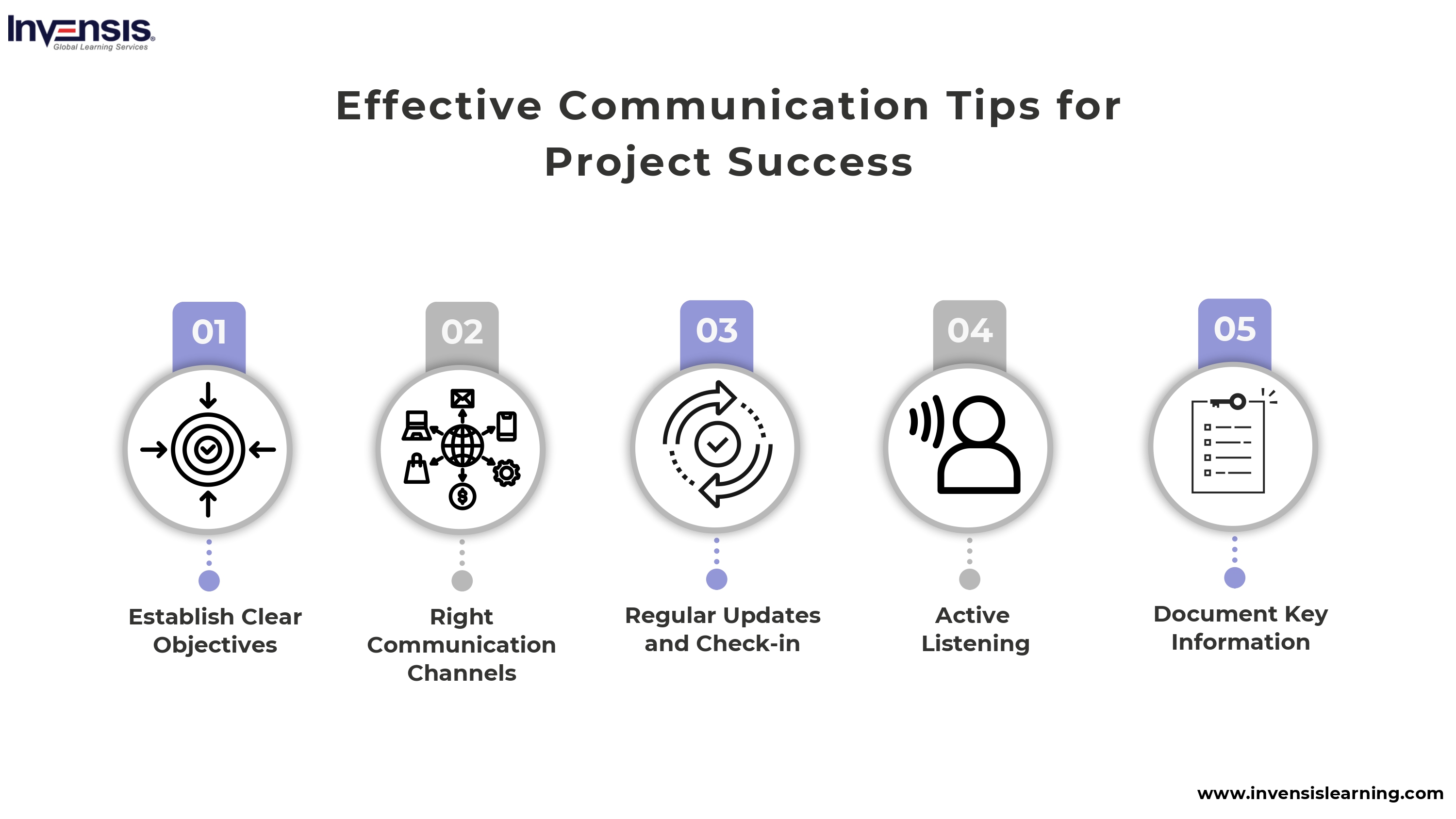
1. Establish Clear Objectives
Clear objectives are the foundation of any successful project. Defining the project goals, deliverables, and timelines from the outset helps avoid ambiguity and misdirection. Everyone should have a shared understanding of what needs to be accomplished and by when. This alignment ensures that the project team works toward a common purpose and prevents scope creep, where the project’s goals become unclear or continuously shift.
2. Use the Right Communication Channels
Choosing the right communication tools is key to maintaining efficiency and clarity in your project. Email might be suitable for formal updates or sharing documents, while instant messaging is better for quick questions or casual updates. Regular team meetings or video calls allow for more in-depth discussions and decision-making. Using the appropriate channel for the situation ensures that your message is received in the right context and facilitates the right level of engagement.
3. Regular Updates and Check-ins
Regular communication through updates, meetings, and check-ins helps maintain momentum and keeps everyone on the same page. This ensures that potential issues are identified early and adjustments can be made before they become bigger problems. A well-structured schedule for project updates also helps stakeholders stay informed about progress, timelines, and any risks that may arise. Keeping everyone in the loop helps build trust and reinforces a team-oriented approach to the project.
4. Active Listening
Communication isn’t just about delivering information; it’s also about understanding others. Active listening involves fully concentrating on what others are saying, understanding their points of view, and responding thoughtfully. By practicing active listening, you make team members feel valued and heard, which can increase their commitment to the project. It also helps uncover valuable insights or concerns that might otherwise go unnoticed, allowing for more informed decision-making.
5. Document Key Information
Proper documentation is essential for maintaining consistency and transparency throughout the project. By documenting key discussions, decisions, and action items, you create a historical record that can be referenced if needed. This documentation helps avoid confusion in case of conflicting interpretations of verbal agreements and ensures accountability. It also aids in onboarding new team members, tracking progress, and keeping stakeholders informed. Additionally, thorough documentation provides a solid foundation for post-project reviews or audits.
Improving Communication Skills for Better Project Outcomes
Developing strong communication skills is vital for ensuring project success, as it directly influences collaboration, problem-solving, and decision-making within teams. Effective communication ensures that everyone involved in a project understands their roles, expectations, and overall objectives, leading to smoother execution and better results.
Here are some key communication skills necessary for project success:
- Clarity and Conciseness: Being able to convey messages clearly and without unnecessary complexity is fundamental. Clear communication helps prevent misunderstandings and ensures all team members and stakeholders easily understand the message, whether it's an email, presentation, or meeting.
- Active Listening: Effective communication is not just about speaking but also listening. Active listening ensures that you fully understand the perspectives of your team members and stakeholders, which helps in making informed decisions, addressing concerns, and fostering a collaborative environment.
- Non-Verbal Communication: A significant portion of communication occurs non-verbally through body language, facial expressions, and tone of voice. Awareness of these elements helps ensure that the communicated message aligns with non-verbal cues, enhancing trust and engagement.
- Adaptability: The ability to adjust your communication style based on your audience is crucial. Whether communicating with senior executives, team members, or clients, tailoring your language and approach ensures that the message resonates and meets the specific needs of the audience.
- Conflict Resolution: Effective communication plays a key role in resolving conflicts. By addressing misunderstandings or disagreements calmly and diplomatically, project leaders can maintain positive relationships and ensure that the team remains focused on the project's objectives.
- Emotional Intelligence: Understanding and managing emotions, both your own and others, helps build strong relationships. By being emotionally aware, project managers can communicate in ways that motivate the team, reduce stress, and improve overall team dynamics.
- Feedback and Constructive Criticism: Providing and receiving feedback is essential for continuous improvement. Constructive criticism, delivered with empathy and respect, helps team members grow and enhances project outcomes. It's also important to create a culture where feedback is welcomed and acted upon.
- Persuasion and Negotiation: The ability to persuade and negotiate is vital in project management, whether it's securing resources, influencing stakeholders, or resolving differences of opinion. Strong persuasive skills help project managers gain buy-in and move the project forward.
Conclusion
Effective communication is the cornerstone of successful project management. It ensures that all team members, stakeholders, and clients are on the same page, working towards shared goals with clarity and collaboration. By fostering transparency, minimizing misunderstandings, and promoting trust, communication not only drives the project forward but also creates a positive and productive work environment. To achieve project success, developing strong communication skills, choosing the right channels, and maintaining regular updates and active listening is essential.
If you're looking to enhance your project management skills, Invensis Learning offers comprehensive Project Management courses that can help you master communication and other key project management competencies.