Introduction
Every project involves more than just a team executing tasks; it involves people who influence, support, or are impacted by the outcome. These individuals and groups are known as project stakeholders, and understanding who they are is critical to project success. Whether you are managing a small internal initiative or a large enterprise program, identifying the project's stakeholders helps you align expectations, reduce risks, and improve decision-making.
So, what is a project stakeholder? In simple terms, a project stakeholder is anyone who has an interest in the project or can affect its outcome, directly or indirectly. This includes internal teams, customers, sponsors, vendors, and even regulatory bodies. In project management, stakeholders play a key role in shaping requirements, influencing priorities, and determining overall success.
In this guide, we will break down the stakeholders in a project, explore the different types of stakeholders in project management, and explain why managing them effectively is one of the most important responsibilities of a project manager.
Who are Project Stakeholders?
Project stakeholders are individuals, groups, or organizations interested in a project and can influence or be influenced by its decisions, activities, or outcomes. They may be directly involved in the project or indirectly affected by its results. Stakeholders can range from those actively contributing to the project’s execution, such as project managers and team members, to those affected by its deliverables, such as customers, vendors, and regulatory bodies.
Stakeholders in a project bring varying expectations, concerns, and perspectives that can significantly influence the project's direction. Identifying and understanding who the stakeholders are early in the project helps ensure their needs are met, risks are managed, and communication flows effectively. This alignment is crucial for achieving project success and delivering outcomes that meet both the project's goals and stakeholders' expectations.

Why Are Stakeholders Important for a Project?
Stakeholders play a vital role in a project's success or failure. Their involvement, support, and influence directly impact the project’s progress, outcomes, and alignment with organizational goals. Understanding and managing stakeholders effectively is essential for navigating complexities and ensuring project success.
| “Project success is closely linked to effective stakeholder engagement.” |
Here are the key reasons why stakeholders are important for a project:
- Stakeholders, with their diverse perspectives, help define the project's goals, objectives, and scope. Their input ensures the project aligns with business needs and user expectations
- Stakeholders can provide essential resources like funding, personnel, and equipment. Their support is often critical for project initiation and continuation
- Positive stakeholder relationships foster project support and collaboration. Engaged stakeholders are more likely to champion the project and overcome challenges
- Identifying and addressing stakeholder concerns early on helps mitigate potential risks. Their insights can reveal unforeseen challenges and potential roadblocks
- Successful stakeholder management leads to higher project success rates and enhances the organization's reputation. Satisfied stakeholders become advocates for future projects
- Stakeholders play a key role in the change management process. Their support is essential for smooth transitions and the successful adoption of project outcomes
Type of Project Stakeholders in Project Management
Project stakeholders can be classified based on their level of involvement, influence, and relationship to the project. Understanding the different types of stakeholders is essential for effective management and ensuring that their interests and concerns are addressed.
Below are the primary types of project stakeholders:
Internal Stakeholders
- Project Manager: Responsible for the overall planning, execution, and completion of the project
- Project Team Members: Individuals directly involved in the project’s tasks and activities
- Project Sponsor: An executive who provides financial and political support for the project
- Executive Management: Top-level leaders within the organization who are vested in the project's success
- Other Departments: Departments within the organization that may be affected by or contribute to the project
External Stakeholders
- Customers: The individuals or organizations who will ultimately use the product or service delivered by the project
- Suppliers: Organizations that provide goods or services required for the project
- Competitors: Other businesses that may be affected by the project's outcome
- Government Agencies: Regulatory bodies or government departments that may have an interest in the project
- Local Community: Residents or organizations in the local area that the project may impact
Examples of Project Stakeholders in a Project
Project stakeholders come from various backgrounds and have different levels of involvement, influence, and interest in the project. Below are examples of key stakeholders you may encounter in a typical project:
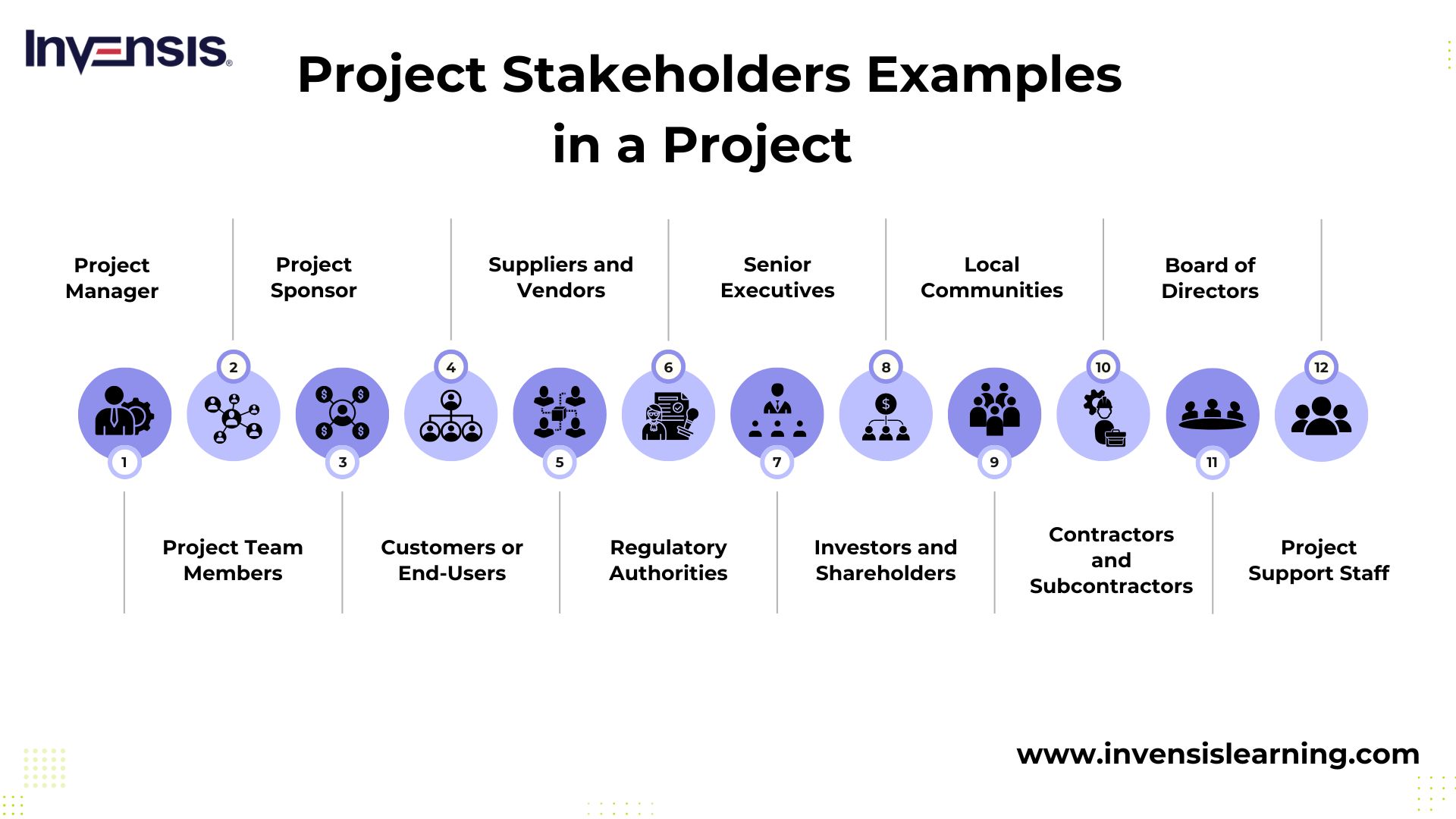
- Project Manager: The project manager oversees the project, ensuring it meets goals, stays on schedule, and manages risks. They are the central point of communication for stakeholders and make key decisions
- Project Team Members: Project team members execute the tasks and activities critical to project success. Their contributions, such as design or development, drive the project toward its objectives
- Project Sponsor: The project sponsor provides resources, support, and approval for the project. They influence key decisions and ensure the project aligns with organizational goals
- Customers or End-Users: Customers and end-users benefit from the project's deliverables, which help define requirements. Their feedback ensures the project meets its intended purpose and delivers value
- Suppliers and Vendors: Suppliers and vendors provide the materials, services, or products necessary for the project. Their performance affects the project's schedule, quality, and cost
- Regulatory Authorities: Regulatory authorities enforce legal and safety standards the project must comply with. Their approval is essential for project advancement and deliverable acceptance
- Senior Executives: Senior executives make high-level decisions, ensuring the project aligns with strategic goals. They also approve budgets and help resolve significant issues or risks
- Investors and Shareholders: Investors and shareholders have a financial interest in the project's success. They are concerned with the return on investment (ROI) and financial performance
- Local Communities: Local communities are affected by projects, particularly in construction or infrastructure. Their concerns may include environmental impact, disruptions, and quality of life
- Contractors and Subcontractors: Contractors and subcontractors perform specialized tasks or provide services. Their work directly impacts the project's quality, timeline, and cost
- Board of Directors: The board of directors provides oversight and strategic direction for high-level projects. They ensure that the project aligns with the organization's long-term vision and goals
- Project Support Staff: Project support staff provide administrative, HR, or financial assistance to the project team. Their role ensures smooth operations and supports the project's logistical needs
Roles of a Project Stakeholder
Stakeholder roles are crucial to a project’s success, ensuring the service aligns with business goals, meets customer needs, and delivers optimal value. Below are the key roles that stakeholders play:
1. Defining the Service
Stakeholders, including customers and internal teams, are essential in defining the service's scope, requirements, and objectives. By involving them in the early stages, their input helps shape the service to meet both user needs and business goals. Their feedback ensures that the service is designed with quality and relevance, addressing the key issues it aims to resolve.
2. Deploying the Service
Stakeholders must be kept updated on the progress of the service's deployment. Regular communication ensures they are aware of the implementation status, potential risks, and required adjustments. Involving stakeholders during this phase allows them to provide feedback and make decisions that enhance the service's delivery, ensuring a smooth setup and reducing deployment issues.
3. Service Operation and Monitoring
Monitoring the service's performance is critical, as it directly affects stakeholders. It is important to understand their needs and how they use the service to ensure its effectiveness. Regularly sharing performance data with stakeholders, such as service levels and user satisfaction, helps identify areas for improvement and ensures the service meets their expectations. This ongoing engagement ensures continuous improvement and alignment with business goals.
How to Identify Project Stakeholders?
Identifying project stakeholders starts with reviewing the project charter and documentation to understand the scope and objectives. Stakeholders are categorized as internal or external, with distinctions between direct and indirect and positive, negative, or neutral stakeholders. This helps recognize who will be impacted by the project and their level of support or opposition.
Techniques such as stakeholder workshops, interviews, and brainstorming sessions, along with tools like stakeholder analysis matrices, can help prioritize and organize stakeholders. Since the process is dynamic, it is essential to continuously assess and update stakeholder information as the project progresses, ensuring all relevant parties are considered throughout the project lifecycle.
How to Manage Project Stakeholders?
Effectively managing project stakeholders is key to ensuring that the project meets its objectives and is delivered successfully. Successful stakeholder management helps maintain support, minimize conflicts, and ensure alignment throughout the project lifecycle.
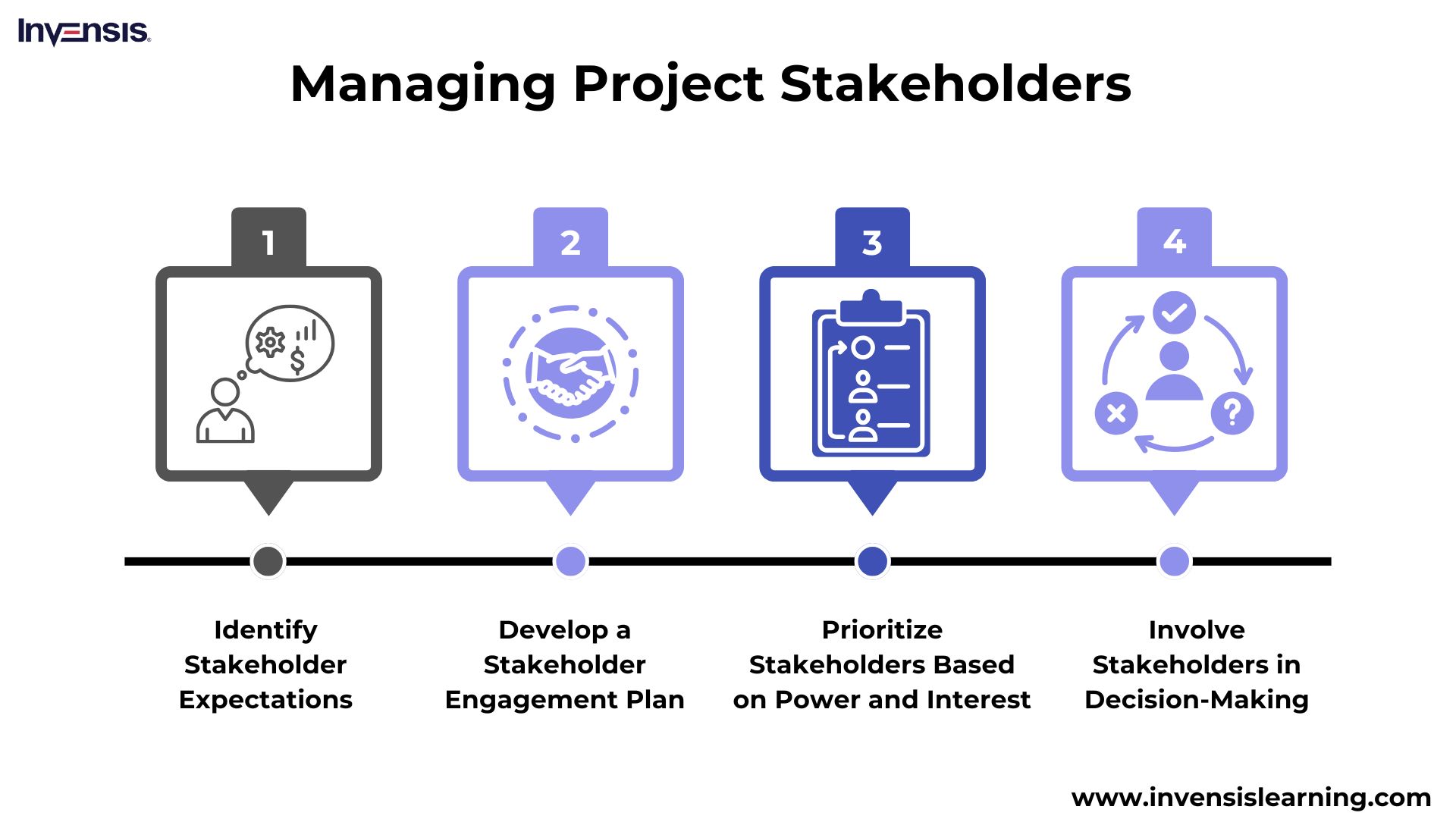
Here's how to manage project stakeholders effectively:
-
Identify Stakeholder Expectations
Start by identifying and understanding each stakeholder's expectations, needs, and concerns. This can be achieved through meetings, surveys, or interviews. By gaining insight into their goals, you can anticipate their demands and address potential issues early on. Clear understanding ensures that stakeholder expectations are aligned with the project's goals.
-
Develop a Stakeholder Engagement Plan
Create a comprehensive stakeholder engagement plan that outlines how to communicate with each stakeholder based on their interests, power, and influence. The plan should specify the frequency and methods of communication (e.g., meetings, reports, emails) to keep stakeholders informed and engaged. This ensures transparency and establishes trust.
-
Prioritize Stakeholders Based on Power and Interest
Not all stakeholders have the same level of influence over the project. Use tools like the Power-Interest grid to classify stakeholders based on their level of influence and interest in the project. This helps prioritize stakeholder engagement, ensuring that high-power/high-interest stakeholders receive the most attention and that their needs are adequately addressed.
-
Involve Stakeholders in Decision-Making
Where possible, involve key stakeholders in the decision-making process. Their input can provide valuable insights and help ensure decisions align with their needs and expectations. Engaging stakeholders in this way increases their commitment to the project and helps prevent conflicts later on.
|
“Whenever you’re in conflict with someone, there is one factor that can make the difference between damaging your relationship and deepening it. That factor is attitude.” |
 |
Conclusion
Understanding project stakeholders is not just a theoretical concept; it is a practical necessity for delivering successful projects. From identifying stakeholders in a project to actively managing their expectations, communication, and influence, stakeholder management directly impacts project outcomes. Whether you are dealing with internal teams, clients, or external partners, knowing who the project's stakeholders are helps you reduce risks, avoid conflicts, and ensure smoother execution.
In modern project management, the ability to identify and manage stakeholders is one of the most critical skills a professional can develop. Projects rarely fail solely because of technical issues; they fail due to misalignment, poor communication, and unmanaged stakeholder expectations. That is why mastering stakeholder management in project management is essential for long-term career growth and project success.
If you want to build strong stakeholder management skills and advance your career, Invensis Learning's Project Management Professional (PMP)® Certification Training provides structured, real-world insights into managing project stakeholders, aligning business goals, and leading successful projects with confidence.