
Effective project management depends on tracking key metrics to ensure goals are met and projects progress smoothly. These metrics act as measurable indicators, helping project managers evaluate performance, identify risks, and maintain control over every project lifecycle stage. By focusing on relevant data points, managers can streamline processes, allocate resources more effectively, and foster collaboration among team members. Tracking metrics ensures that projects stay on schedule and within budget and highlights areas where improvements can be made, ultimately leading to higher efficiency and better results.
This blog will explore essential project management metrics that every PM should monitor to ensure project success. These metrics include progress tracking, resource allocation, budget adherence, quality control, and stakeholder satisfaction. Understanding and applying these metrics will enable project managers to make data-driven decisions, anticipate potential challenges, and deliver projects that meet or exceed expectations. Whether you are managing small initiatives or large-scale projects, these metrics provide the foundation for achieving excellence in project management.
What Are Project Management Metrics?
Project management metrics are quantifiable measures to evaluate and monitor a project's performance, progress, and success. These metrics provide objective data on schedule adherence, budget control, quality standards, resource utilization, and risk management. By tracking these metrics, project managers can identify potential issues, make informed decisions, and ensure the project aligns with its goals. Common metrics include on-time task completion, budget variance, defect rates, and resource efficiency, all of which help improve project predictability and overall outcomes.
Significance of Project Management Metrics in Evaluating Project Success
Project management metrics are essential tools for assessing a project's progress, performance, and overall success. These metrics provide quantifiable data that enable project managers to make informed decisions, address potential issues proactively, and align project outcomes with organizational goals. Here's why they are crucial: 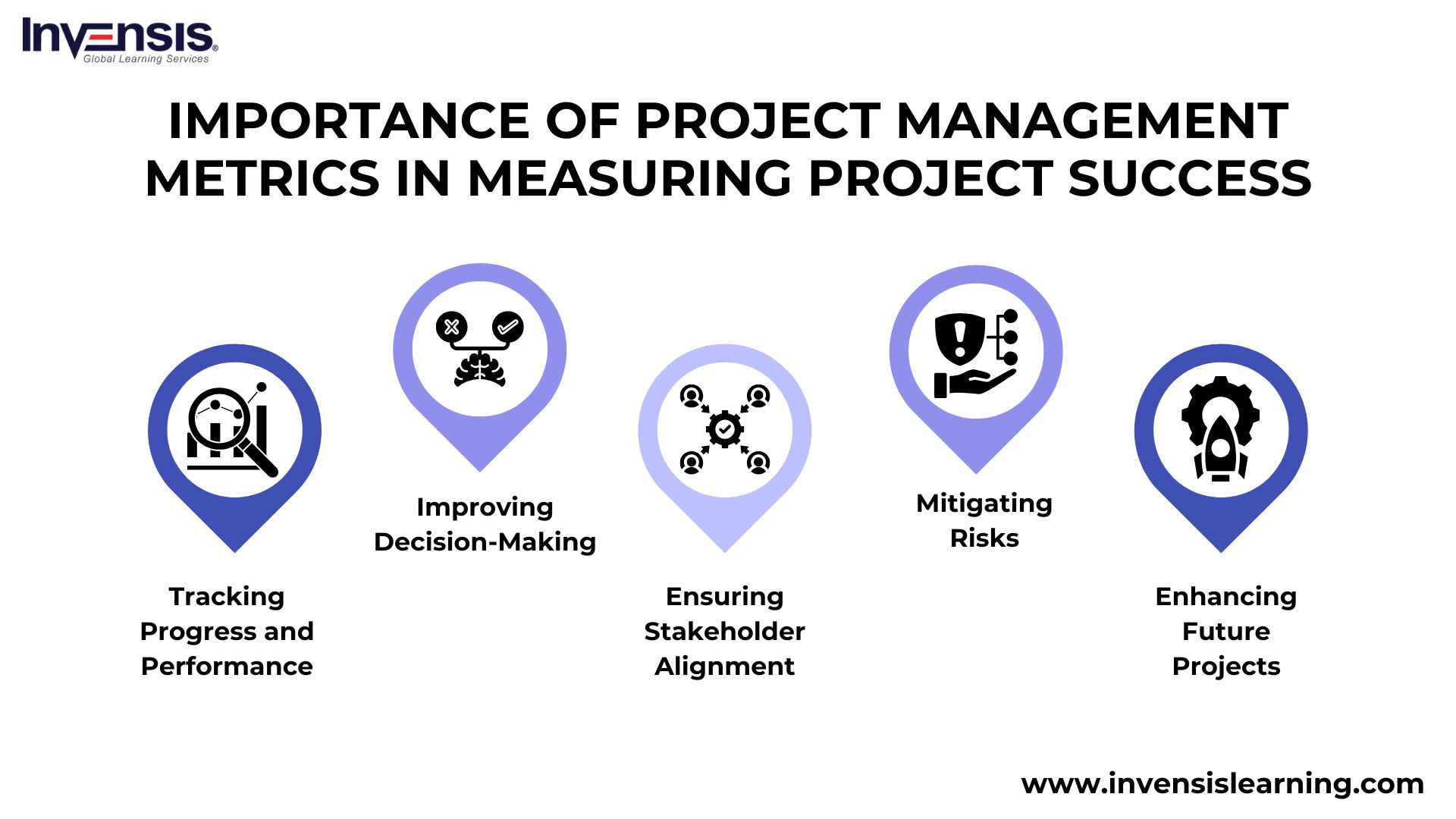
- Tracking Progress and Performance: Metrics help monitor a project's adherence to its timeline, budget, and scope. Key performance indicators (KPIs) such as schedule variance (SV) and cost variance (CV) enable managers to assess whether the project is on track or requires adjustments
- Improving Decision-Making: By providing objective insights, metrics empower project managers to identify bottlenecks and prioritize resources effectively. For example, metrics related to resource utilization can highlight inefficiencies, allowing teams to reallocate efforts for maximum productivity
- Ensuring Stakeholder Alignment: Metrics facilitate transparent communication with stakeholders by offering measurable proof of project status. Metrics like earned value (EV) and customer satisfaction scores help demonstrate progress toward goals and build stakeholder confidence
- Mitigating Risks: Early identification of deviations from planned metrics enables proactive risk mitigation. For example, tracking risk occurrence rates and issue resolution times helps prevent minor setbacks from escalating into major problems
- Enhancing Future Projects: Analyzing metrics from completed projects provides valuable lessons for future endeavors. Metrics like actual vs. planned performance and lessons learned can guide better planning and execution in subsequent projects
Top 10 Project Management Metrics
Project Management Metrics are essential tools that help project managers measure, track, and analyze the progress and success of a project. These metrics are crucial for making informed decisions, ensuring the project stays on track, and achieving its objectives.
Here are some of the key project management metrics:
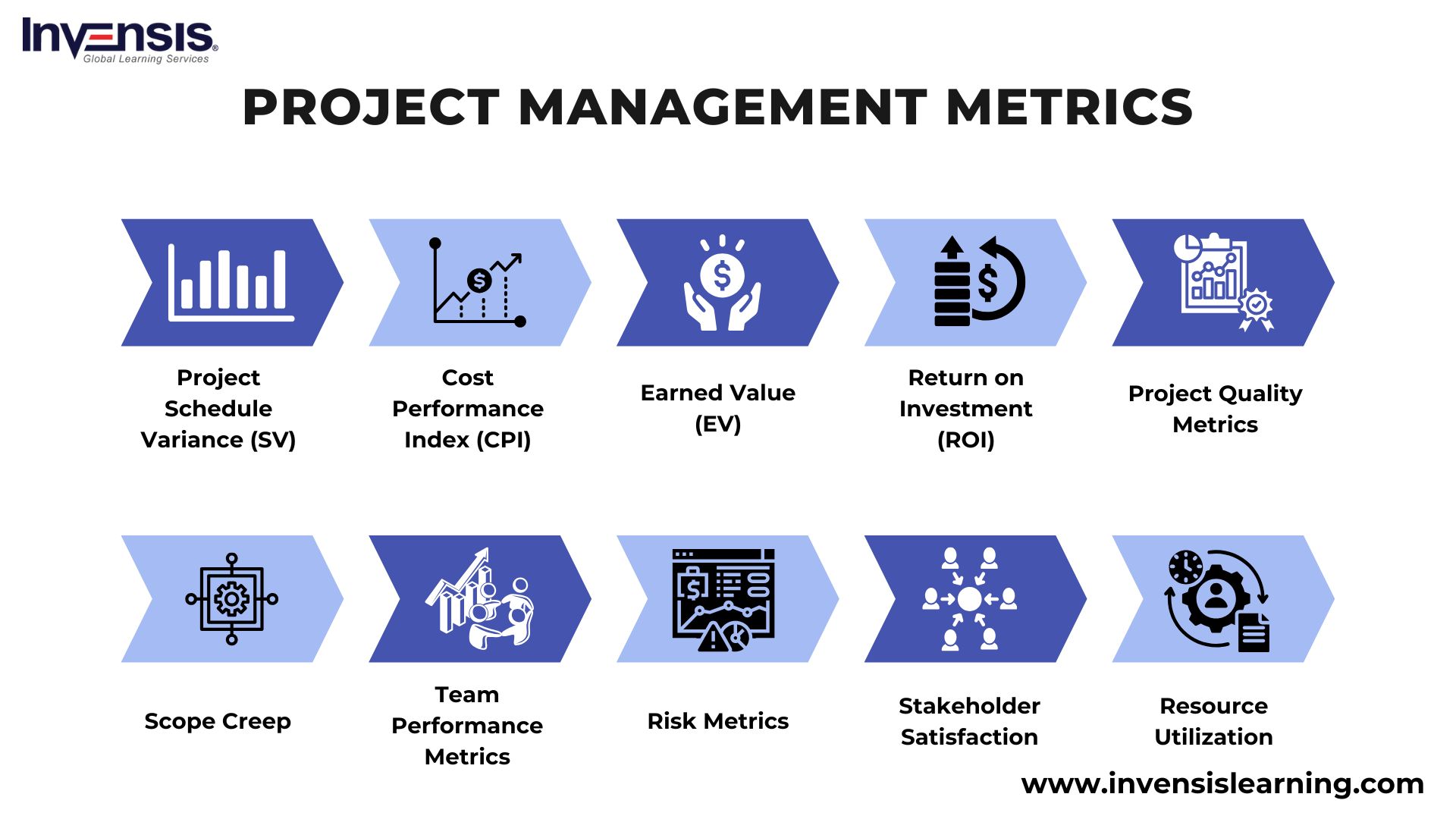
1. Project Schedule Variance (SV)
Project Schedule Variance is a key metric for determining if a project is progressing according to its planned schedule. It compares the Earned Value (EV) (the value of work completed) to the Planned Value (PV) (the value of work that was planned to be completed by a specific time).
Formula: SV = EV - PV
A positive SV indicates that the project is ahead of schedule, whereas a negative value means it’s behind schedule. By monitoring this metric, project managers can determine if corrective actions are needed to stay on track.
2. Cost Performance Index (CPI)
The cost Performance Index measures the cost efficiency of the work performed. It compares the Earned Value (EV) of the project (the value of work completed) with the actual Cost of Work Performed (ACWP).
Formula: CPI = EV / ACWP
A CPI greater than 1 indicates the project is under budget, meaning the cost efficiency is higher than expected. A value less than 1 signals that the project is over budget, requiring careful analysis and corrective action. Monitoring CPI helps ensure the project stays within financial constraints and helps identify areas where costs may rise.
3. Earned Value (EV)
Earned Value (EV) quantifies the value of the work completed up to a given point. It provides insight into project performance and is a critical indicator of whether the project meets its objectives on time and within budget.
Formula: EV = Percent of Work Completed × Total Project Budget
EV helps track both time and cost performance and serves as the basis for other important metrics like Schedule Variance (SV) and Cost Performance Index (CPI).
4. Return on Investment (ROI)
Return on Investment (ROI) evaluates the financial value generated by a project relative to its cost. It’s a fundamental metric for assessing whether the project provides sufficient financial return to justify the investment.
Formula: ROI = (Benefits - Costs) / Costs
A higher ROI indicates that the project is delivering good value, while a negative ROI suggests that the project might not be worth pursuing. This metric helps justify the project’s initiation and can be used to demonstrate its success once it is completed.
5. Project Quality Metrics
Quality is crucial for project success, and Project Quality Metrics help ensure that the project meets the desired standards and objectives. These metrics often include:
- Defect Rates: The number of defects or issues found in the project’s deliverables
- Rework Percentage: The proportion of work that needs to be redone due to quality issues
- Customer Satisfaction: Feedback from stakeholders or customers regarding the quality of the deliverables
Tracking these metrics ensures that the project not only meets the required specifications but also delivers a final product that satisfies stakeholders and customers.
6. Scope Creep
Scope Creep refers to the uncontrolled changes or additions to a project’s scope after the project has started. It can cause delays, cost overruns, and resource strains if not managed effectively. This metric tracks the extent to which the scope has been expanded beyond the initial plan, helping project managers identify whether unauthorized changes are being introduced
Formula: Scope Creep = (New Work Added) / (Original Project Scope)
By monitoring scope creep, project managers can implement better change control processes and prevent the project from drifting away from its original goals.
7. Team Performance Metrics
Team Performance Metrics help assess the productivity and efficiency of the project team. It’s important to measure team members' output and overall effectiveness to ensure project success.
- Task Completion Rate: The percentage of tasks completed on time
- Time Spent on Tasks: The amount of time spent on each project task relative to the estimated time
- Employee Engagement: Surveys or feedback mechanisms to gauge team members' motivation and commitment level
High team performance is often linked to better project outcomes, so it’s crucial to track these metrics to identify potential resource issues or areas for improvement.
8. Risk Metrics
Risk Metrics assess how well potential risks are managed and whether their impact has been mitigated. It’s essential to continuously track risks throughout the project lifecycle to avoid costly surprises. Some key risk metrics include:
- Risk Impact: The severity of risks encountered and how they affect project objectives
- Risk Possibility: The probability of risks occurring
- Risk Exposure: A combination of the likelihood and impact, providing a sense of the total exposure to risks
By closely tracking risk metrics, project managers can take proactive measures to reduce risk exposure and enhance project stability.
9. Stakeholder Satisfaction
Stakeholder Satisfaction is a critical metric that reflects how well the project is meeting the expectations of its stakeholders. Keeping stakeholders satisfied helps ensure continued support and avoids conflicts that can risk project success.
- Surveys and Feedback: Regular surveys and feedback collection can gauge stakeholder sentiment
- Frequency of Stakeholder Engagement: Monitoring how often stakeholders are involved and their level of engagement with the project
Stakeholder satisfaction is particularly important for long-term projects or those that require external buy-in and support for successful completion.
10. Resource Utilization
Resource Utilization measures how efficiently resources (e.g., people, equipment, materials) are being used in the project. It ensures that resources are allocated effectively to avoid bottlenecks and ensure optimal productivity.
Formula: Resource Utilization = (Total Work Done) / (Available Resources)
By tracking this metric, project managers can ensure that resources are neither underutilized (leading to inefficiency) nor overburdened (leading to burnout and project delays) Effective resource utilization allows the project to maintain a balance between cost and schedule, contributing to the project’s overall success. 
How Do You Select the Right Project Management Metrics to Track?
Choosing the right project management metrics is crucial to monitoring progress and ensuring successful project outcomes. Start by understanding the project's objectives, whether focused on meeting deadlines, staying within budget, or maintaining quality. Once you know the project's goals, select Key Performance Indicators (KPIs) that align with these objectives, such as time, cost, quality, and scope metrics. Involve stakeholders to ensure their needs are met, as different groups may focus on different aspects of the project, such as financial management or resource utilization.
It's also important to balance leading and lagging indicators to anticipate potential issues and measure past performance. Keep the metrics simple and focused on providing actionable insights, avoiding complications. Continuously review and adapt the metrics as the project evolves, ensuring they remain relevant and aligned with project goals. By selecting the most impactful metrics, project managers can track progress effectively, address risks early, and drive project success.
Conclusion
Tracking key project management metrics is essential for ensuring the successful delivery of projects. By focusing on metrics such as project schedule, cost performance, resource utilization, risk management, and stakeholder satisfaction, project managers can maintain control, identify potential issues early, and make informed decisions. These metrics not only enhance the efficiency of project execution but also provide valuable insights into areas for improvement, fostering continuous growth and success in future projects. Mastering these metrics is crucial for any project manager committed to delivering high-quality results within time and budget constraints.
To enhance your skills in project management, consider enrolling in Invensis Learning’s Project Management Certification Courses. Gain the expertise needed to manage projects successfully and advance your career today!