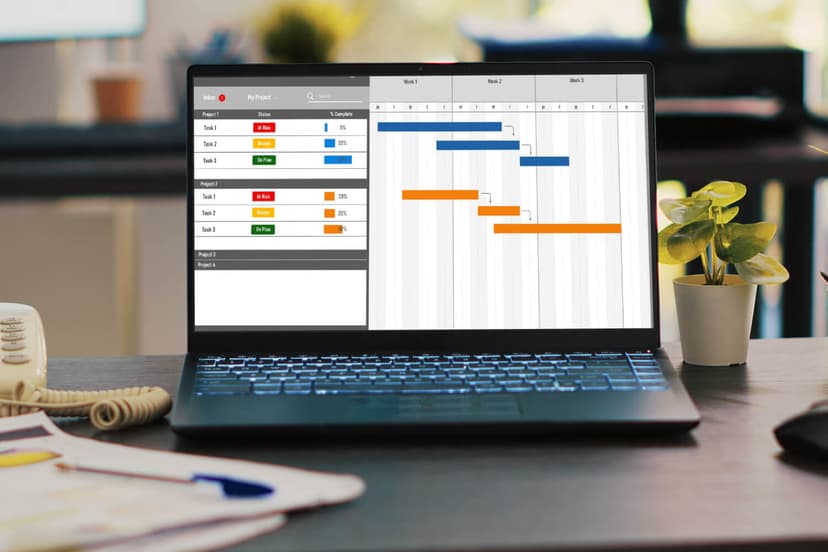
Task management software has evolved beyond static project plans and single-user tools. In 2026, teams need platforms that support real-time collaboration, clear task ownership, and fast execution across distributed workforces.
Many organizations are moving away from traditional tools such as Microsoft Project in favor of solutions that are easier to adopt, faster to scale, and better suited to agile and cross-functional teams.
This guide reviews the top task management software for teams in 2026, focusing on usability, flexibility, and each tool's support for modern team workflows.
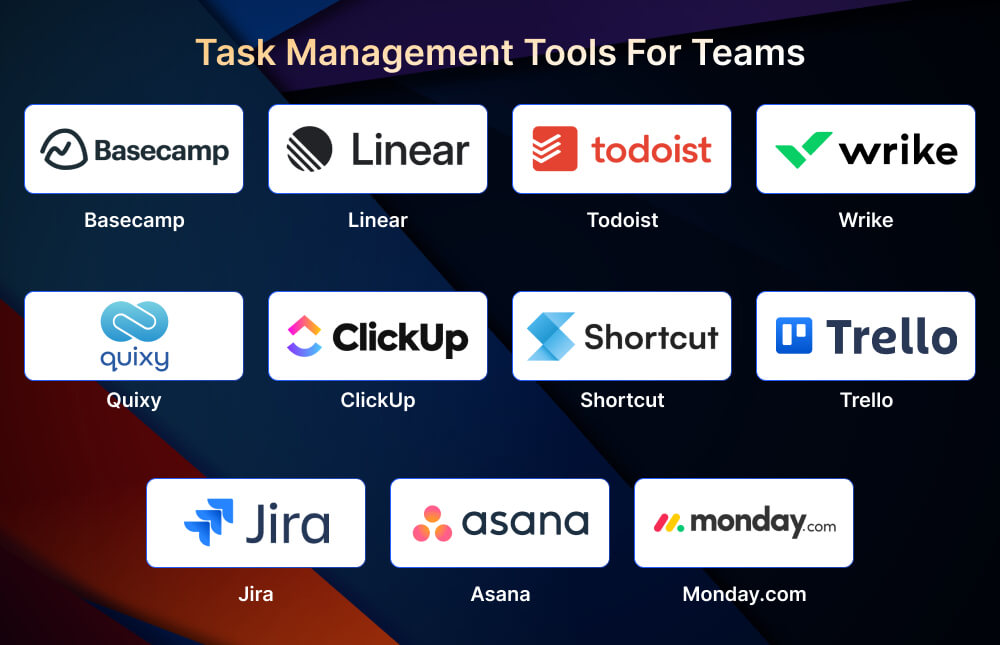
11 Best Task Management Tools for Teams in 2026
Here, you’ll find a focused overview of core features, strengths, limitations, and pricing to help you understand where each solution fits best. The tools are evaluated based on usability, collaboration support, scalability, and task visibility. This makes it easier to match specific team needs with the right software. Use these insights to shortlist tools that align with your workflow and project demands.
1. Basecamp

Basecamp is a task management platform built for teams that want clarity, simplicity, and a single place to organize all their work. Designed to reduce tool overload, Basecamp brings tasks, messages, files, schedules, and decision-making into one structured workspace. With features like to-dos, message boards, card tables, and automatic reports, it helps teams track responsibilities, avoid scattered communication, and keep daily work moving without friction.
Key Features
- To-dos for assigning tasks, setting deadlines, and keeping accountability visible.
- Card Tables (Basecamp’s Kanban) for organizing workflows and tracking progress.
- Message Boards for centralizing discussions and attaching context to tasks.
- Scheduling for deadlines, milestones, and events synced with Google/Apple/Outlook.
- Automatic Check-ins and reports showing completed work, overdue tasks, and activity history.
- Campfires & Pings for quick team or 1:1 task-related conversations.
- Docs & Files to store assets connected directly to tasks or projects.
Pros
- Extremely simple, beginner-friendly structure that keeps task management clean.
- Consolidates tasks, discussions, and files in one place, reducing app switching.
- Strong visibility with reports, Hill Charts, and real-activity tracking.
Cons
- No advanced automation or complex task logic for large organizations.
- Kanban and timeline tools are simpler compared to specialized PM tools.
- Time tracking requires a paid add-on (Timesheet upgrade).
Pricing
Basecamp pricing uses a mix of free, user-based, and fixed plans to support individuals, small teams, and growing businesses.
- Free: $0 (1 project, 1 GB storage)
- Plus: $15/user/month
- Pro Unlimited: $299/month (billed annually) or $349/month monthly
2. Linear

Linear is a fast, purpose-built task management platform designed for modern product and engineering teams that want speed, clarity, and structured workflows. It centralizes issues, tasks, sprints, and long-term initiatives, so teams can plan, prioritize, and execute work without friction. With features like Cycles, Triage, custom workflows, AI assistance, and real-time analytics, Linear helps teams manage daily tasks while keeping long-term product efforts aligned and on track.
Key Features
- Ultra-fast issue and task creation optimized for keyboard-first workflows.
- Cycles for structured sprint planning and task focus.
- Triage to review, route, and assign incoming bug reports or requests.
- Custom workflows, SLAs, filters, and board/list views tailored to team needs.
- Real-time analytics through Linear Insights for cycle time, workload, and progress.
- Project planning tools, including milestones, initiatives, and visual timelines.
- AI agents for task breakdowns, summaries, automations, and technical assistance.
- Integrations with GitHub, Slack, Intercom, Zendesk, and more.
Pros
- Extremely fast and efficient for high-volume task creation and updates.
- Strong sprint-centric features (Cycles, Triage, SLAs) built specifically for engineering tasks.
- Clean, minimal interface ideal for teams that value speed and focus.
Cons
- Not built for non-technical teams that need broad project management features.
- Roadmapping and documentation remain simpler compared to multi-purpose platforms.
- Most advanced analytics and automations require Business or Enterprise plans.
Pricing
Linear offers transparent pricing with plans that scale as teams and workflows grow.
- Free: $0 (250 issues, 2 teams)
- Basic: $10/user/month
- Business: $16/user/month
- Enterprise: Contact sales
3. Todoist
Todoist is a clean, intuitive task management platform built for individuals and teams that want a reliable way to capture, organize, and prioritize daily work. With natural-language task creation, powerful filters, reminders, and cross-device syncing, Todoist helps users turn scattered ideas into structured to-dos. It’s built for both personal organization and team collaboration, making it easy to manage tasks, track progress, and stay focused on what matters throughout the day.
Key Features
- Quickly add tasks with natural language for instant task creation.
- Recurring due dates, custom reminders, and location-based alerts.
- Priority levels, labels, sections, and subtasks for structured organization.
- Today, Upcoming, List, Board, and (in Pro/Business) Calendar views.
- Real-time sync across desktop, mobile, wearables, browsers, and email add-ons.
- Shared team workspace with roles, permissions, and 500+ team projects.
- Integrations with Google Calendar, Chrome, Outlook, Slack, and 90+ tools.
- Todoist Assist (AI) for task suggestions, summaries, filters, and email conversion.
Pros
- Extremely easy to use, ideal for personal and professional task management.
- Strong recurring tasks and reminders system that reduces mental load.
- Flexible for solo use, yet powerful enough for cross-team task coordination.
Cons
- Advanced features like Calendar views and unlimited filters require upgrades.
- Not suited for complex project scheduling compared to heavier PM tools.
- Large teams may outgrow Todoist’s simplicity for end-to-end project planning.
Pricing
Todoist plans are simple and affordable for personal productivity and team task management.
- Beginner: $0 (5 projects, reminders, basic filters)
- Pro: $4/user/month billed yearly (300 projects, calendar view, custom reminders, AI Assist)
- Business: $6/user/month billed yearly (team workspace, 500 projects, roles, templates, centralized billing)
4. Wrike

Wrike is a powerful work and task management platform built for teams that need structure, automation, and visibility across fast-moving work. Its strength lies in flexible task creation, custom item types, deep automation, and AI-driven assistance that helps teams prioritize, delegate, and accelerate daily tasks. With support for unlimited projects, cross-tagging, custom fields, dashboards, and advanced views such as Gantt, Calendar, and Table, Wrike adapts to any workflow, from marketing teams to enterprise operations. Real-time collaboration, dynamic request forms, and strong integrations make Wrike ideal for organizations that manage large volumes of tasks and require clarity at scale.
Key Features
- One-click task creation with blueprints, dynamic request forms, and templates.
- Wrike AI for subtask generation, prioritization, content editing, and summaries.
- Custom item types to match unique team processes and naming conventions.
- Cross-tagging, custom views, dashboards, and multiple workspaces.
- Automations, approvals, proofing, and workload/resource planning.
- Real-time reporting, analytics, and progress insights.
- 400+ integrations (Google, Adobe, Slack, Salesforce, MS Teams, and more).
Pros
- Extremely customizable for any task-heavy workflow or department.
- Strong automation and AI capabilities that reduce repetitive work.
- Scales seamlessly from small teams to large enterprises.
Cons
- Can feel overwhelming for very small or simple use cases.
- Higher-tier features such as resource planning and advanced reporting require upgrades.
- Setup and customization may take time for non-technical teams.
Pricing
Wrike offers multiple plans designed for teams of different sizes and complexity levels.
- Free: $0/user/month (basic task management, board/table views, AI essentials)
- Team: $10/user/month (unlimited tasks, dashboards, automations, custom fields, Gantt)
- Business: $25/user/month (blueprints, approvals, resource planning, custom item types)
- Enterprise: Custom pricing (SSO, custom roles, audit logs, advanced security)
- Pinnacle: Custom pricing (advanced analytics, capacity planning, budgeting, Datahub)
5. Quixy
Quixy is a no-code and AI-powered platform that lets teams design their own task and workflow management apps instead of relying on fixed, off-the-shelf tools. Rather than just giving you task lists and boards, it lets you model processes end-to-end: forms, workflows, rules, approvals, and dashboards. For task managers who deal with complex internal processes (approvals, multi-step workflows, cross-team handoffs), Quixy becomes the engine behind those tasks, automating routing, enforcing business rules, and centralizing data.
Key Features
- No-code UI and workflow designer to build custom tasks and process apps.
- Business rules, validations, and field-level access control.
- Data tables with advanced data functions for task and record management.
- Document generation plus reports and advanced dashboards for task insights.
- Mobile apps (Android & iOS) for on-the-go task handling.
- Audit logs, IP filtering, SSO/LDAP/SAML, and custom password policies.
- White-label mobile app and theme studio on higher tiers.
Pros
- Extremely flexible for teams that need custom task/workflow structures.
- Strong governance: audit logs, access controls, and enterprise security options.
- Scales from simple task flows to complex, cross-department processes Cons.
- Overkill if you just need a simple to-do or kanban tool.
- Pricing is quote-based, so it’s harder to compare quickly with competitors.
- Requires some upfront design effort to unlock full value.
Pricing
Quixy uses quote-based pricing with three main plans:
- Solution: Best when users are many but apps/workflows are few (unlimited workspaces, limited apps, storage as per hosting instance).
- Platform (Business): Best when you need lots of apps/workflows (unlimited apps, 5 GB storage per user).
- Enterprise: For large organizations needing enterprise features (unlimited apps, 10 GB storage per user, platinum support, advanced security).
Extra storage can be added at $0.10/GB/month.
6. ClickUp

ClickUp is a full work-management hub built to replace dozens of disconnected apps with one unified workspace for tasks, projects, docs, whiteboards, AI agents, and team communication. For task managers, it offers everything you need to structure work, from simple checklists to complex cross-team workflows, while its AI “Brain” automates reminders, assignments, updates, and content creation. Because ClickUp blends productivity tools with AI super-agents, it’s ideal for teams juggling high task volume, dependencies, and constant context switching.
Key Features
- All-in-one task management: lists, boards, Gantt, calendars, sprints, and workload.
- ClickUp Brain: AI agents for drafting messages, generating updates, assigning tasks, and answering questions.
- Docs, wikis, forms, whiteboards, dashboards, and time tracking.
- Custom fields, statuses, automations, dependencies, and goals.
- Advanced search across 3rd-party tools (Drive, Gmail, Slack, Figma, etc.).
- Strong collaboration: guests, comments, chat, clip recordings, proofing.
- Enterprise-level security (SOC 2, HIPAA, GDPR).
Pros
- Extremely feature-rich, tasks, docs, chat, AI, and dashboards in one place.
- AI agents automate repetitive task management.
- Scales for individuals, small teams, and enterprises.
Cons
- Feature overload for users who want a lightweight tool.
- It can be slow without cleanup or workspace structure.
- Learning curve is higher than simpler task apps.
Pricing
ClickUp pricing is transparent and plan-based:
- Free: Unlimited tasks, Kanban boards, docs, sprints, 60MB storage, 24/7 support.
- Unlimited – $7/user/month: Unlimited storage, integrations, Gantt charts, custom fields, time tracking, and email in ClickUp.
- Business – $12/user/month: Google SSO, unlimited dashboards & mind maps, workload, advanced automations, private whiteboards.
- Enterprise: Custom SSO, custom roles, data residency, white labeling, dedicated CSM, managed services.
ClickUp also offers specialized add-ons like ClickUp Brain and Connected Search to extend task automation and cross-app visibility.
7. Shortcut
Shortcut is a lightweight task and project management tool built specifically for software teams that want structure without bloat. It combines backlogs, sprints, Kanban boards, docs, and roadmaps so product managers, engineers, and designers can track tasks from idea to release. With Korey, its AI product management agent, Shortcut also helps teams scope work, track status, and keep projects aligned with goals.
Key Features
- Kanban boards, backlogs, iterations/sprints, and epics for structured task tracking.
- Roadmaps and objectives to connect day-to-day tasks to product and business goals.
- Work in Progress (WIP) limits to keep tasks flowing instead of piling up.
- Custom workflows, custom fields, labels, and automations for repeatable task patterns.
- Docs for PRDs and specs, plus GitHub/GitLab/Bitbucket, Slack, Figma, Sentry, and more integrations.
- Korey AI and “Shortcut for Agents” to help with status, scoping, and routine PM work.
Pros
- Very approachable for software teams coming from Jira or Trello.
- Clear sprint, epic, and roadmap structure for task-to-strategy alignment.
- Strong value for startups (nonprofit and startup programs available).
Cons
- Focused on software teams, less ideal for non-technical departments.
- Advanced reporting and objectives are only available on higher plans.
Pricing
Here’s a quick look at Shortcut’s pricing plans for different team sizes and needs:
- Free: $0, up to 10 users, Kanban, sprints, roadmap, basic reports, GitHub/Slack/Figma
- Team: From $8.50/user/month (billed annually) – more reports, WIP limits, multiple workflows, automations, all integrations
- Business: From $12/user/month – “unlimited everything,” OKRs, advanced custom fields, advanced reports, multiple workspaces
- Enterprise: Custom pricing with volume discounts, SSO/SCIM, SLAs, onboarding support
8. Trello
Trello is a simple, flexible task-management tool built around boards, lists, and cards. It’s ideal for personal organization, small teams, and visual workflows. With Inbox, Boards, Planner, and built-in automation, Trello helps users capture ideas, turn messages into actionable tasks, and keep everything organized in one place.
Key Features
- Inbox for fast idea and task capture
- Boards for organizing to-dos and project stages
- Planner view for dragging tasks onto a calendar
- AI-powered quick capture from email, Slack, Teams
- No-code automation for repetitive actions
- Card mirroring across boards
- Views: Calendar, Timeline, Table, Dashboard, Map (Premium+)
Pros
- Extremely beginner-friendly
- Flexible for personal and team use
- Large library of Power-Ups and integrations
Cons
- Limited advanced project management capabilities
- AI features and advanced views require paid plans
Pricing
Here’s a quick look at Trello pricing plans to help you choose the right option:
- Free — $0: Up to 10 collaborators, unlimited cards, integrations, Inbox, email/Slack/Teams capture, mobile apps
- Standard — $5/user/month: Unlimited boards, AI quick capture, Planner access, card mirroring, advanced checklists, custom fields
- Premium — $10/user/month: All Standard features + AI writing, advanced views (Calendar, Timeline, Table, Dashboard, Map), workspace views, observers
- Enterprise — $17.50/user/month: All Premium features + unlimited workspaces, org-wide permissions, attachment restrictions, SSO, centralized admin
9. Jira
Jira is a structured project and work management platform built for teams that plan, track, and deliver work across backlog, list, board, timeline, and calendar views. It helps teams break large initiatives into issues, link dependencies, automate updates, and improve visibility across every stage of execution. With Rovo AI powering quick insights, search, and assisted planning, Jira supports teams that manage iterative work, cross-team coordination, and complex workloads that need continuous clarity and control.
Key Features
- Scrum & Kanban boards for agile teams
- Backlog, list, board, calendar, timeline, and summary views
- Rovo AI for search, chat, insights, and automation support
- Out-of-the-box dashboards and reports
- Custom workflows and issue types
- Dependency tracking and cross-team planning (Premium)
- 3,500+ integrations and extensions
- Mobile apps for iOS and Android
Pros
- Excellent for structured and agile workflows
- Powerful reporting with built-in dashboards
- Strong ecosystem with thousands of integrations
Cons
- Can feel heavy for very small teams
- Advanced planning features require higher plans
Pricing
Here’s a quick snapshot of Jira pricing plans so you can review Jira pricing plans at a glance:
- Free — $0: Up to 10 users, unlimited projects/tasks/goals, multiple views, 100 automation runs/month, 2GB storage
- Standard — $7.91/user/month: Roles & permissions, external collaboration, Rovo AI features, 1,700 automation runs/month, 250GB storage
- Premium — $14.54/user/month: Cross-team planning, approvals, per-user automation limits, unlimited storage, 24/7 support, 99.9% uptime SLA
- Enterprise — Custom: Advanced analytics, data lake, enterprise IAM, unlimited automation, multiple sites, 99.95% SLA
10. Asana

Asana is a structured work management platform built for teams that need clear task ownership, workflow automation, and visibility across projects. With AI-powered task creation, multi-homing, Timeline, dependencies, and a growing suite of automation tools, Asana helps teams prioritize work, track progress, and connect daily tasks to broader goals. It supports everything from onboarding and campaigns to product development, making it ideal for teams that want clarity and accountability in one system.
Key Features
- AI task creation and prioritization
- Multi-homing tasks across multiple projects
- Timeline and Gantt views
- Workflow Builder for no-code automation
- Custom fields, forms, rules, and approvals
- Native time tracking
- Integrations with 200+ tools (Gmail, Teams, Jira, Salesforce, etc.)
- Portfolios, workload, and goals (Advanced+)
Pros
- Excellent structure for growing teams
- Strong automation tools
- Clear visibility from tasks to company objectives
Cons
- Advanced portfolio features are locked behind higher plans
- The interface can feel busy for small personal use
Pricing
Here’s a quick look at Asana pricing plans to help you compare Asana pricing plans with ease:
- Personal — $0: 2 users, unlimited tasks/projects, list/board/calendar views, basic search, mobile apps, 100+ free integrations
- Starter — $10.99/user/month: Timeline + Gantt, Workflow Builder, dashboards, advanced search, custom fields, forms, unlimited automations, admin console
- Advanced — $24.99/user/month: Goals, portfolios, workload, approvals, branching forms, native time tracking, Salesforce/Tableau/Power BI integrations
- Enterprise — Custom: Workflow bundles, resource management, SAML/SCIM, service accounts, compliance controls, admin permissions, custom branding
- Enterprise+ — Custom: Audit logs, SIEM/DLP/eDiscovery integrations, managed workspaces, key management, data residency, HIPAA (eligible orgs)
11. Monday.com

monday.com is a flexible work management platform designed for teams that need to organize tasks, track progress, automate routine actions, and collaborate in one shared space. Its boards, timelines, dashboards, and automation tools help teams structure their workflows and streamline daily execution. With drag-and-drop task organization, real-time collaboration, and hundreds of integrations, monday.com supports teams that want customizable task tracking without complexity. It’s widely used for team to-do lists, planning, and cross-functional workflows.
Key Features
- Drag-and-drop task management
- Real-time collaboration with comments, files, and updates
- Timeline, Gantt, Calendar, and Chart views
- Customizable boards and column types
- Integrations with 200+ apps (Slack, Google Drive, Jira, Outlook, etc.)
- Automations for recurring work
- Dashboards combining multiple boards
- Resource and portfolio management (Enterprise)
Pros
- Highly customizable for any workflow
- Great visual views for planning
- Strong collaboration features are built into each board
Cons
- Automations and integrations are limited on lower plans
- It can feel overwhelming for simple, personal use
Pricing
Here’s a quick overview of monday.com pricing plans so you can review monday.com pricing plans in a simple snapshot:
- Free — $0: Up to 2 seats, 3 boards, 3 docs, 200+ templates, 8 column types, mobile apps
- Standard — $12/seat/month: Unlimited items/boards, guest access, 250 automations, 250 integrations, Timeline & Gantt, dashboards (5 boards)
- Pro — $19/seat/month: Private boards, Chart View, time tracking, formula column, 25K automations, 25K integrations, dashboards (20 boards)
- Enterprise — Custom: Portfolio management, resource management, enterprise automations & integrations, advanced security, multi-level permissions, dashboards (50 boards), enterprise support
Conclusion
Selecting the right project or task management platform is ultimately about enabling teams to work with clarity, consistency, and accountability. The alternatives discussed in this guide reflect how project delivery has evolved, prioritizing collaboration, visibility, and adaptable planning over rigid, one-size-fits-all tools. Yet, software alone does not guarantee successful outcomes. Effective task management depends on strong fundamentals such as scope control, scheduling discipline, risk awareness, and stakeholder communication.
To build these capabilities, formal training remains a valuable investment. Invensis Learning offers globally recognized programs, including PMP Certification Training, PRINCE2 Foundation and Practitioner, Agile Scrum Master, and PMI-ACP Certification. These courses equip professionals with practical frameworks and decision-making skills that complement any task management software, helping teams deliver projects more predictably and with greater confidence.