

You’ve spent years mastering the technical intricacies of engineering, designing systems, solving complex problems, and turning concepts into reality. Your expertise has made you invaluable to your organization. Yet, as you watch colleagues with less technical prowess advance to leadership positions while you remain in your technical role, a critical question emerges: Is technical excellence alone enough to propel your career forward?
For millions of engineers worldwide, the answer increasingly points toward a strategic credential that bridges technical mastery with leadership capability: the Project Management Professional (PMP) certification. According to the Project Management Institute’s latest salary survey, engineers with PMP certification earn 33% more than their non-certified peers, with median salaries reaching $120,000 in the United States. More importantly, PMI forecasts a talent gap of 30 million project professionals, creating unprecedented opportunities for engineers who can combine technical expertise with project management competency.
The engineering-to-project-management pathway represents one of the most natural and lucrative career progressions available. Engineers already possess critical advantages: analytical thinking, problem-solving prowess, technical credibility, and systematic approaches to complex challenges. Adding PMP certification transforms these technical strengths into leadership capabilities, positioning you for roles as an engineering project manager, program manager, or PMO director, positions commanding median salaries of $165,370 (with top earners exceeding $233,000, according to the Bureau of Labor Statistics).
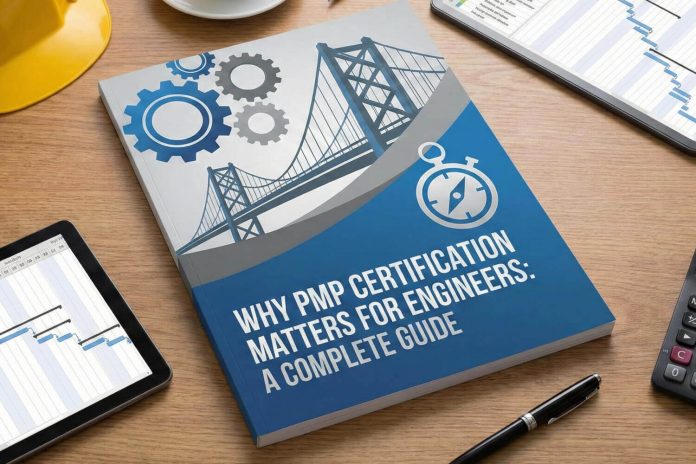
This comprehensive guide explores why PMP certification is particularly valuable for engineers, how it accelerates career progression, the unique advantages engineers bring to project management, and proven strategies for a successful transition.
Table of Contents:
- The Unique Advantages Engineers Bring to Project Management
- The Financial Case: ROI of PMP Certification for Engineers
- How PMP Certification Transforms Your Engineering Career Path
- Strategic Approach: How Engineers Should Pursue PMP Certification
- Taking Action: Your Engineer-to-PM Roadmap
- Conclusion
- Frequently Asked Questions
Why Engineers Hit the Career Ceiling Without Project Management Skills
Engineers face a paradoxical career challenge: the technical expertise that makes them excellent in their roles can also become a ceiling limiting their advancement. Understanding this dynamic is the first step toward breaking through.
The Technical Expert Trap
Engineering careers typically follow predictable trajectories: junior engineer → engineer → senior engineer → principal engineer. While these progressions offer increasing technical complexity and compensation, they eventually plateau. Principal engineers command respect and good salaries, but they remain individual contributors executing others’ strategic visions rather than shaping organizational direction.
The Reality of Technical Advancement:
- Limited positions: Only a small percentage reach principal engineer or distinguished engineer levels.
- Narrow scope: Influence remains confined to technical domains, not business strategy.
- Compensation ceiling: Technical tracks max out below leadership compensation levels.
- Organizational impact: Individual contributions, however excellent, have a bounded impact.
According to career progression data, engineers who remain in purely technical roles see their salary growth flatten after 10-12 years, while those who transition to management roles experience continued growth throughout their careers.
| RESEARCH INSIGHT
“Engineering managers earn a median salary of $165,370 annually, representing a 34% premium over senior engineers ($123,000 median). More significantly, career earnings divergence becomes dramatic over time: engineers who transition to management by age 35 earn $1.2-$1.8 million more over their careers than those who remain in technical tracks.” Source: U.S. Bureau of Labor Statistics |
What Prevents Engineers from Advancing to Leadership?
The barriers aren’t about capability; engineers possess the analytical skills, problem-solving abilities, and work ethic that leadership demands. Instead, several factors create friction:
- Lack of Formal Project Management Credentials
Many organizations require or strongly prefer PMP certification for project management positions. Without this credential, engineers find themselves passed over for roles they could excel in, with less technically competent but certified candidates receiving opportunities instead.
- Limited Exposure to Business and Strategic Thinking
Engineering education emphasizes technical problem-solving but often neglects business acumen, financial management, stakeholder engagement, and strategic planning, competencies essential for leadership roles.
- Insufficient People Management Experience
Technical excellence doesn’t automatically translate to team leadership. Engineers transitioning to management must develop new skills: motivating diverse teams, managing conflicts, communicating with non-technical stakeholders, and thinking strategically about organizational goals.
- Perception as “Too Technical”
Paradoxically, deep technical expertise can create perception challenges. Hiring managers sometimes worry that highly technical engineers will micromanage technical details rather than focusing on strategic oversight, a concern PMP certification helps overcome by demonstrating formal project management competency.
The Market Reality: Engineering Projects Need Certified PMs
The engineering project management landscape has fundamentally shifted. According to recent industry analysis:
Market Dynamics:
- Most of the engineering project management roles now list PMP certification as preferred or required.
- Engineering manager positions increasingly expect both technical and PM credentials.
- Construction, infrastructure, and manufacturing sectors especially emphasize PMP for project oversight.
- Software and IT engineering positions blend Agile certifications with PMP for comprehensive methodology coverage.
This market shift reflects organizational learning: projects led by PMP-certified managers demonstrate significantly higher success rates, better budget adherence, and improved stakeholder satisfaction than those managed by uncertified professionals, even those with extensive technical expertise.
| AVOID THIS MISTAKE
Assuming your technical expertise alone qualifies you for project management roles Why it’s problematic: While technical knowledge provides credibility and problem-solving capability, project management demands distinct competencies: stakeholder management, resource allocation, risk assessment, schedule management, and team leadership. Organizations recognize this distinction and increasingly require formal PM credentials to validate these capabilities. What to do instead: View PMP certification as complementing rather than replacing your technical expertise. The combination creates a powerful credential stack: technical credibility + management competency = leadership readiness. This dual expertise makes you uniquely valuable and positions you for rapid advancement. |
The Unique Advantages Engineers Bring to Project Management
While engineers need PMP certification to access leadership opportunities, they simultaneously possess inherent advantages that make them exceptionally well-suited for project management roles. Understanding these strengths helps you leverage them strategically.
1. Technical Credibility and Deep Domain Knowledge
Engineers enter project management with a substantial advantage: technical credibility that cannot be taught through certification alone. This credibility provides:
Authority with Technical Teams:
- Engineers speak the language of their teams, understanding technical challenges viscerally.
- Teams respect PMs who comprehend the complexity of their work.
- Technical discussions remain productive because the PM understands nuances.
- Problem-solving benefits from PM’s ability to grasp technical constraints and possibilities.
Realistic Planning and Estimation:
- Engineers estimate task durations more accurately based on technical complexity understanding.
- Resource allocation reflects genuine technical requirements rather than guesswork.
- Risk assessment incorporates technical failure modes that non-technical PMs miss.
- Quality standards align with engineering realities rather than arbitrary business metrics.
2. Analytical Problem-Solving Skills
Engineering education and practice develop systematic problem-solving approaches that transfer directly to project management:
Structured Analysis:
- Breaking complex problems into manageable components (work breakdown structure thinking).
- Root cause analysis for issues and delays.
- Data-driven decision making based on metrics and evidence.
- Systems thinking that considers interconnections and dependencies.
Risk Management Aptitude:
- Engineers naturally think in terms of failure modes and mitigation strategies.
- Probabilistic thinking about uncertainty and variability.
- Preventive approaches rather than reactive crisis management.
- Technical risk assessment that non-engineer PMs struggle to evaluate.
3. Process Orientation and Systematic Thinking
Engineers excel at creating, documenting, and optimizing processes, a core project management competency:
Process Development:
- Designing efficient workflows that minimize waste and maximize value.
- Documenting procedures for repeatability and knowledge transfer.
- Continuous improvement mindset focused on optimizing outcomes.
- Quality assurance approaches ensuring consistent deliverables.
Methodology Adoption:
- Comfort with structured methodologies (Waterfall, Agile, hybrid approaches).
- Understanding when different approaches suit different project types.
- Adapting frameworks to specific organizational and project contexts.
- Balancing methodology rigor with pragmatic flexibility.
4. Resource Optimization Expertise
Engineering training emphasizes optimization under constraints, directly applicable to project management:
Constraint Management:
- Making optimal trade-offs between time, cost, quality, and scope.
- Maximizing value delivery within budget and schedule constraints.
- Creative problem-solving when resources are limited.
- Understanding technical dependencies that affect scheduling and resource allocation.
5. Quality Focus and Attention to Detail
Engineering disciplines emphasize precision, quality, and attention to detail, critical for successful project delivery:
Quality Management:
- Understanding quality standards and compliance requirements.
- Implementing quality assurance and quality control processes.
- Preventing defects rather than just detecting them.
- Documentation practices that ensure traceability and accountability.
6. Adaptability Across Industries
Engineers with PMP certification gain remarkable career flexibility because their combined expertise applies across sectors:
Industry Mobility:
- Mechanical engineers: Manufacturing PM, automotive project management, aerospace programs.
- Civil engineers: Construction project management, infrastructure programs, urban development.
- Electrical engineers: Power systems projects, automation programs, electronics development.
- Software engineers: IT project management, digital transformation, product development.
- Chemical engineers: Process improvement projects, pharmaceutical programs, energy sector.
This cross-industry applicability provides career resilience and advancement opportunities that purely technical roles cannot match.
The Financial Case: ROI of PMP Certification for Engineers
Beyond career satisfaction and leadership opportunities, PMP certification delivers measurable financial returns that make it one of the highest-ROI professional investments engineers can make.
Salary Comparison: Certified vs. Non-Certified Engineers
Engineering Salary Impact: PMP Certified vs. Non-Certified
| Role | Non-Certified | PMP Certified | Premium |
| Junior Engineer (0-3 yrs) | $70,000 – $85,000 | $85,000 – $100,000 | +17% |
| Mid-Level Engineer (5-8 yrs) | $95,000 – $115,000 | $110,000 – $135,000 | +20% |
| Senior Engineer (10+ yrs) | $120,000 – $140,000 | $145,000 – $175,000 | +25% |
| Engineering Project Manager | $125,000 – $145,000 | $150,000 – $185,000 | +28% |
| Engineering Program Manager | $140,000 – $165,000 | $175,000 – $210,000 | +33% |
| PMO Director / Engineering Manager | $155,000 – $180,000 | $195,000 – $233,000 | +33% |
Source: PMI Salary Survey
Calculating Your Personal ROI
Let’s examine the concrete return on investment for a typical engineering professional pursuing PMP certification:
Investment Breakdown:
- PMP training course: $1,200 – $2,000
- PMI membership (annual): $139
- PMP exam fee (member): $405
- Study materials: $200 – $300
Total investment: $1,944 – $2,844
Return Calculation (Conservative Scenario):
- Current salary (senior engineer): $125,000
- Post-PMP salary (engineering PM): $150,000
- Annual increase: $25,000
- First-year ROI: $25,000 ÷ $2,000 = 12.5x
This calculation only captures year-one gains. Over a 20-year career, the salary premium compounds:
- Annual differential: $25,000
- 20-year cumulative (assuming modest 3% annual raises on a higher base): $640,000 additional lifetime earnings
Beyond Salary: Total Compensation Advantages
Engineering project management roles offer comprehensive benefits beyond base salary:
Expanded Compensation Elements:
- Performance bonuses: PM roles typically offer 10-20% annual bonuses tied to project delivery success
- Stock options/equity: Leadership positions often include equity compensation
- Professional development funding: Organizations invest more in developing leadership talent
- Flexible work arrangements: Senior roles offer greater schedule autonomy
- Retirement contributions: Higher salary base increases employer retirement matching
Career Acceleration Value:
- Promotion velocity: PMP-certified engineers reach management positions 3-5 years faster
- Time-value benefit: Earlier access to leadership salaries compounds over career
- Network effects: Leadership roles provide access to executive networks accelerating future opportunities
Industry-Specific Salary Impacts
The PMP premium varies across engineering disciplines, with some sectors showing particularly strong returns:
High-Return Engineering Sectors:
- Construction/Civil Engineering: +35-40% salary premium (high PMP demand)
- Aerospace Engineering: +30-35% premium (complex program management)
- Manufacturing Engineering: +28-33% premium (process improvement focus)
- Software Engineering: +25-30% premium (Agile + PMP combination valued)
- Chemical/Process Engineering: +25-30% premium (pharmaceutical, oil & gas sectors)
How PMP Certification Transforms Your Engineering Career Path
PMP certification doesn’t just increase your current salary; it fundamentally alters your career trajectory, opening pathways that remain closed to engineers without project management credentials.
Traditional Engineering Career Path (Without PMP)
Typical Progression:
- Years 0-3: Junior Engineer ($70K-$85K)
- Years 3-5: Engineer II ($85K-$100K)
- Years 5-8: Senior Engineer ($105K-$125K)
- Years 8-12: Principal Engineer ($130K-$150K)
- Years 12+: Distinguished Engineer / Technical Fellow ($150K-$180K)
Limitations:
- Influence confined to technical domains
- Limited organizational leadership opportunities
- Career advancement is dependent on specialized technical expertise
- Few positions at principal/distinguished levels (competitive bottleneck)
- Impact constrained to individual or small team contributions
Engineering Career Path with PMP Certification
Accelerated Progression:
- Years 0-3: Engineer + PMP preparation
- Years 3-5: Senior Engineer with PMP ($110K-$135K)
- Years 5-8: Engineering Project Manager ($150K-$185K)
- Years 8-12: Engineering Program Manager ($175K-$210K)
- Years 12+: PMO Director / VP of Engineering ($195K-$250K+)
Expanded Opportunities:
- Leadership of cross-functional teams (engineering, operations, business)
- Strategic influence on organizational direction and priorities
- Portfolio management overseeing multiple programs ($100M+ budgets)
- Executive advancement potential (VP Engineering, CTO track)
- Organizational impact affecting hundreds of employees and major business outcomes
Real Career Transitions: Engineer to Leadership
Let’s examine typical career progression timelines with and without PMP:
Mechanical Engineer Example – No PMP:
- Age 25: Junior Engineer ($72K)
- Age 30: Senior Engineer ($118K)
- Age 35: Principal Engineer ($145K)
- Age 40: Principal Engineer ($158K with raises)
- Total career earnings (15 years): $1.82M
Mechanical Engineer Example – With PMP (earned at age 28):
- Age 25: Junior Engineer ($72K)
- Age 28: Senior Engineer + PMP ($125K) – post-certification promotion
- Age 32: Engineering Project Manager ($165K)
- Age 37: Engineering Program Manager ($195K)
- Age 40: PMO Director ($220K)
- Total career earnings (15 years): $2.36M (+$540K vs non-PMP path)
Opening Doors to Cross-Functional Leadership
PMP certification uniquely positions engineers for leadership beyond engineering departments:
Cross-Functional Opportunities:
- Operations Management: Engineers with PMP can oversee manufacturing operations, supply chain, and logistics
- Product Management: Technical understanding + PM skills = effective product development leadership
- Business Development: Managing technical sales, proposal development, and client relationships
- Quality Management: Leading organizational quality initiatives and continuous improvement programs
- Strategic Planning: Contributing to corporate strategy with technical and PM perspectives
This versatility means job security and options that purely technical engineers lack. When organizational restructuring occurs or industries shift, PMP-certified engineers have multiple viable career paths rather than narrow technical specializations.
| PRO TIP
Pursue PMP certification within your first 5 years of engineering experience for maximum career acceleration The optimal timing for engineers to earn PMP is after gaining 3-5 years of technical experience but before becoming too specialized or senior in technical tracks. This timing allows you to: (1) meet PMP experience requirements, (2) establish technical credibility, (3) position for project lead roles in your late 20s/early 30s—peak career building years, and (4) reach engineering management by mid-30s rather than mid-40s. Earlier certification creates longer compounding benefits throughout your career. |
Strategic Approach: How Engineers Should Pursue PMP Certification
Engineers bring unique strengths to PMP preparation, but also face specific challenges. This strategic approach optimizes your path to certification success.
Leveraging Your Engineering Background
Engineers possess inherent advantages when preparing for PMP certification:
Technical Advantages:
- Analytical thinking: PMP exam emphasizes logical problem-solving that engineers excel at.
- Process understanding: Engineering training in methodologies transfers to PM frameworks.
- Mathematical comfort: Earned value management, critical path calculations come naturally.
- Documentation experience: Engineers understand the importance of thorough documentation.
- Systems thinking: Ability to see project components as integrated systems.
Strategic Preparation Approach:
- Focus on people skills content: Engineers often need more emphasis on stakeholder management, team dynamics, and communication, areas less emphasized in engineering education.
- Connect PM concepts to engineering projects: Relate PMBOK concepts to projects you’ve worked on to deepen understanding.
- Study risk management intensively: While engineers understand technical risk, PMP covers broader risk categories (schedule, cost, stakeholder, organizational).
- Master Agile content: The 2021 PMP exam includes 50% Agile/hybrid methodology content.
Addressing Common Engineer Challenges with PMP Exam
Engineers transitioning to PMP face predictable hurdles:
Challenge 1: People-Focused vs. Technical-Focused Mindset
PMP emphasizes stakeholder management, team leadership, and communication, soft skills that engineering education often under-emphasizes.
Solution: Study people-focused domains (42% of the exam) with extra attention. Take leadership courses or read management books (e.g., “Crucial Conversations,” “The Five Dysfunctions of a Team”) to build conceptual frameworks for human dynamics.
Challenge 2: Situational Judgment Questions
PMP uses scenario-based questions in which multiple answers seem correct, requiring judgment about the “best” or “most appropriate” response.
Solution: Practice situational judgment extensively. Take multiple full-length practice exams focusing on understanding the reasoning behind correct answers, not just memorizing facts. Engineers’ analytical skills help decode the exam’s logic once the pattern is understood.
Challenge 3: Business Terminology and Concepts
Engineers may lack exposure to business concepts like ROI, business case development, benefits realization, and organizational strategy.
Solution: Supplement PMP study with basic business literacy. PMI’s Business Analysis guides or introductory business courses help engineers understand the business context in which projects operate.
Recommended Study Plan for Engineers
12-Week PMP Preparation Timeline:
Weeks 1-3: Foundation Building
- Enroll in quality PMP training course (35 contact hours required)
- Complete PMBOK Guide overview reading (focus on process groups and knowledge areas)
- Watch supplementary videos on areas unfamiliar to engineers (stakeholder management, communications)
Weeks 4-6: Deep Learning
- Study the PMBOK Guide systematically (one knowledge area per week)
- Create mind maps connecting concepts to past engineering projects
- Join PMP study groups (online or local PMI chapter) for peer learning
- Focus extra time on Agile content (Scrum, Kanban, hybrid approaches)
Weeks 7-9: Practice and Assessment
- Take the first full-length practice exam to identify weak areas
- Review incorrectly answered questions to understand the reasoning
- Drill weak knowledge areas with targeted practice questions
- Study PMP formulas (earned value, critical path, communication channels)
Weeks 10-11: Intensive Practice
- Complete 3-4 additional full-length practice exams
- Aim for consistent 75-80% scores before scheduling the actual exam
- Review exam-taking strategies (time management, question interpretation)
- Focus on situational judgment pattern recognition
Week 12: Final Preparation and Exam
- Light review of weak areas identified in practice exams
- Rest well before exam day (mental freshness matters)
- Schedule and complete PMP exam
- Celebrate success!
Balancing PMP Study with Engineering Work
Most engineers pursue PMP while working full-time, requiring strategic time management:
Time Management Strategies:
- Daily study habit: 60-90 minutes consistently beats sporadic marathons
- Leverage commute time: Audio study resources maximize otherwise-lost time
- Weekend intensive sessions: 3-4 hours on weekends for practice exams and deep study
- Communicate with manager: Many employers support PMP pursuit; transparency helps
- Use vacation strategically: Consider taking 2-3 days before exam for final preparation
Total Time Investment: Engineers typically require 100-120 hours of study (including training course) to pass the PMP exam, manageable over 12 weeks with consistent daily commitment.
Taking Action: Your Engineer-to-PM Roadmap
Understanding the value of PMP certification is one thing; taking strategic action to capture that value is another. Here’s your concrete roadmap for transitioning from engineer to engineering project manager.
Step 1: Verify PMP Eligibility
Ensure you meet PMI’s PMP requirements before investing in training:
Educational Path 1 (Most Engineers):
- Bachelor’s degree in engineering or related field ?
- 36 months (3 years) of project management experience
- 4,500 hours leading and directing projects
- 35 contact hours of formal PM education
What Counts as Project Management Experience:
- Leading design projects or product development initiatives
- Coordinating cross-functional engineering teams
- Managing project schedules, budgets, or resources
- Technical project leadership (even without “project manager” title)
| Pro Tip: Engineers often underestimate their qualifying experience. If you’ve led technical projects, coordinated teams, managed deliverables, or owned project outcomes, you likely have eligible experience. |
Step 2: Invest in Quality PMP Training
Select training that addresses engineering-specific needs:
Ideal Training Characteristics for Engineers:
- Live instruction allowing real-time Q&A on soft skills concepts
- Instructors with engineering or technical backgrounds
- Practice questions emphasizing situational judgment
- Agile/hybrid methodology coverage (50% of exam content)
- Post-training support during self-study phase
Invensis Learning offers specialized PMP certification training designed for technical professionals transitioning to project management, combining comprehensive PMBOK coverage with engineering-relevant examples and case studies.
Step 3: Document Your Project Experience
Prepare your PMI application by thoroughly documenting projects:
Application Best Practices:
- Describe 5 projects where you had leadership/coordination roles
- Quantify impact: team size, budget, timeline, technical complexity
- Use PMI’s process group language (Initiating, Planning, Executing, Monitoring & Controlling, Closing)
- Be specific about your role and responsibilities
- Include both successful projects and challenging ones (showing learning)
Audit Preparation: PMI randomly audits 10% of applications. Keep documentation (emails, project plans, performance reviews) proving your claimed experience for 12 months post-certification.
Step 4: Build Momentum with Small Leadership Opportunities
While preparing for PMP, gain additional project management experience:
Immediate Actions:
- Volunteer for project coordination roles in current engineering position
- Lead cross-functional initiatives: Quality improvements, process optimization, tool selection
- Mentor junior engineers: Develop leadership and coaching skills
- Present at team meetings: Practice stakeholder communication
- Document processes: Create procedures, standards, work instructions
These activities simultaneously build PM experience and prepare you for management responsibilities.
Step 5: Network with Engineering Project Managers
Learn from those who’ve successfully made the transition:
Networking Strategies:
- Join PMI local chapter: Attend events where engineers-turned-PMs share experiences
- LinkedIn outreach: Connect with engineering project managers in your industry
- Informational interviews: Ask about their transition journey, lessons learned
- Internal networking: Connect with PMs in your organization for mentorship
- Online communities: Participate in r/pmp, r/projectmanagement, PMI forums
Step 6: Position for Internal Promotion or External Opportunities
Once PMP-certified, strategically position for project management roles:
Internal Promotion Strategy:
- Inform manager of certification: Discuss career aspirations and PM opportunities
- Request project lead assignments: Demonstrate capabilities in low-risk scenarios
- Document PM accomplishments: Build evidence of successful project leadership
- Apply for internal PM positions: Leverage existing relationships and organizational knowledge
External Opportunity Strategy:
- Update resume/LinkedIn: Highlight PMP certification prominently and reframe engineering experience using PM language
- Target engineering PM roles: Look for positions requiring both technical and PM expertise
- Leverage industry knowledge: Focus on sectors where your engineering background provides an advantage
- Prepare interview narratives: Craft stories demonstrating both technical and leadership capabilities
Conclusion
The engineering career landscape has fundamentally evolved. While technical excellence remains essential, it’s no longer sufficient for engineers aspiring to leadership, strategic influence, and compensation growth commensurate with their capabilities. PMP certification bridges this gap, transforming technical expertise into leadership credentials that organizations recognize, value, and reward.
The numbers speak compellingly: 33% salary premiums, $640,000+ additional lifetime earnings, promotion timelines accelerated by 3-5 years, and access to executive leadership tracks that remain closed to engineers without project management credentials. Yet beyond financial returns, PMP certification addresses a deeper professional need, the desire to make broader organizational impact, lead teams toward meaningful goals, and shape strategic direction rather than merely executing others’ visions.
For engineers, PMP certification represents natural career evolution, not radical pivot. Your analytical thinking, problem-solving prowess, technical credibility, and systematic approaches already position you for project management success. PMP simply formalizes these capabilities while adding the stakeholder management, business acumen, and leadership frameworks that complete the transformation from technical contributor to organizational leader.
Frequently Asked Questions
1. Can I pursue PMP certification while still working as a full-time engineer, or should I transition to a PM role first?
Absolutely pursue PMP while in your engineering role, in fact, this is the optimal strategy. You likely already have qualifying project management experience from leading technical projects, coordinating teams, or managing deliverables. Most engineers successfully earn PMP while working full-time by dedicating 10-15 hours weekly over 12 weeks. The certification then positions you for internal PM promotions or external opportunities. Waiting to transition first creates a catch-22: you can’t get PM roles without certification, but you delay certification until you have a PM role.
2. How does PMP certification compare to an MBA for engineers seeking career advancement?
PMP and MBA serve different purposes. PMP specifically validates project management competency and typically requires $2,000-$2,500 and 3 months of preparation. An MBA provides broader business education, costs $60,000-$120,000, and requires 1.5-2 years. For engineers specifically targeting project/program management roles, PMP delivers higher ROI, the credential is recognized internationally and directly applicable to engineering project management. Pursue MBA if you want broader business leadership options beyond PM. Many successful engineers earn PMP first, then MBA years later if pursuing executive tracks.
3. Will my specific engineering discipline affect how valuable PMP certification is for my career?
PMP provides value across all engineering disciplines, though magnitude varies by sector. Construction/civil engineers see 35-40% premiums (highest demand for PM credentials); aerospace and manufacturing engineers see 30-35% premiums; software and IT engineers see 25-30% premiums (though often combined with Agile certifications). Regardless of discipline, if your career involves coordinating projects, managing teams, or overseeing deliverables, PMP opens leadership opportunities. Chemical, industrial, environmental, and biomedical engineers all benefit substantially from PM credentials.
4. I’m a software engineer working in Agile environments. Is PMP still relevant, or should I focus on Scrum Master certifications instead?
The modern PMP exam (updated 2021) includes 50% Agile/hybrid content, making it highly relevant for software engineers. The optimal strategy is PMP + Agile certifications (CSM or PMI-ACP). PMP provides comprehensive methodology knowledge and business/strategic perspectives; Agile certifications add specialized framework expertise. Organizations increasingly seek technical leaders who understand both traditional and Agile approaches, enabling hybrid methodologies. Software engineers with PMP command higher salaries than those with only Agile credentials, and PMP opens opportunities beyond pure Agile shops.
5. How long after earning PMP certification should I expect to see salary increases or promotion opportunities?
Timeline varies by approach:
- Internal promotion: 3-6 months if you communicate certification completion to management and express interest in PM.
- External opportunities: Immediately, you can apply for PM roles and negotiate higher salaries as soon as certified.
- Annual review cycle: 6-12 months if waiting for next review cycle to negotiate raise. Proactive engineers who actively pursue PM responsibilities post-certification see fastest results. The average engineer reports salary impact within 4-8 months, with 69% seeing returns within 6 months according to PMI data.
6. What if I don’t have the required project management experience hours to qualify for PMP?
If you’re short on documented experience, you have several options:
- Re-evaluate current role: Engineers often undercount their PM experience, leading design reviews, coordinating teams, managing technical deliverables, and owning project outcomes all qualify.
- CAPM first: Earn Certified Associate in Project Management (requires less experience), then accumulate hours toward PMP.
- Volunteer for PM responsibilities: Request project coordination roles, lead cross-functional initiatives, or manage improvement projects to build qualifying experience.
- Document going forward: Start tracking current project work with a PM lens and build documentation toward a future PMP application.
7. As an introvert who prefers technical work, will I struggle with the people management aspects of engineering project management?
Many successful engineering project managers are introverts; technical expertise combined with thoughtful communication often yields better results than extroverted charisma without technical depth. Project management allows structured, process-oriented approaches to people interactions (status meetings, stakeholder updates, team coordination), which suit analytical introverts well. The key is deliberately developing people skills, not changing personality. PMP training teaches stakeholder management frameworks that make interpersonal aspects more systematic and predictable. You can be an effective PM while remaining true to your introverted nature, technical credibility carries tremendous weight.